Empagliflozin in resistant hypertension and heart failure with preserved ejection fraction: the EMPEROR-Preserved trial
European Heart Journal


Abstract
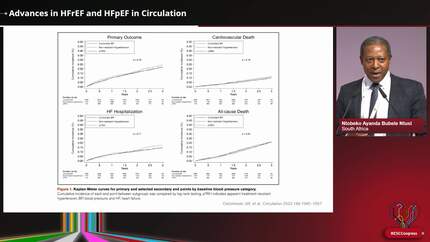
Hypertension has a high prevalence in heart failure with preserved ejection fraction (HFpEF), which can be controlled, uncontrolled, or even resistant. The effects of empagliflozin on systolic blood pressure (SBP), time in target range, incidence of hypertensive urgencies, and studied cardiovascular and renal outcomes in different hypertension categories and after treatment with empagliflozin in the EMPEROR-Preserved trial were explored.
A total of 5533 patients were studied and the population was separated into resistant (resHTN), uncontrolled (uctrHTN), and controlled (ctrHTN) hypertension. The effect of SBP on outcomes and treatment effects of empagliflozin were explored. Analyses were done with Cox regression analyses adjusted for demographic and clinical confounders and with a mixed model for repeated measures.
Empagliflozin reduced SBP in resHTN slightly more than in the other categories in the first weeks, while thereafter there were no significant differences. The modest reduction in SBP resulted in a moderate increase in time at target and reduced hypertensive urgencies. The primary endpoint was more prevalent in resHTN (
In HFpEF, the prevalence of resHTN is high and is associated with frequently higher outcome rates compared with ctrHTN and uctrHTN. The treatment effect was not modified by hypertension categories. This indicates that in HFpEF, moderate modifications of blood pressure do not affect overall outcomes and treatment effects of empagliflozin.
Contributors


Faiez Zannad
Author


Michael Böhm
Author
Javed Butler
Author
Andrew Coats
Author

Felix Mahfoud
Author
Gerasimos Filippatos
Author
João Pedro Ferreira
Author
Stuart J Pocock
Author
Martina Brueckmann
Author
Sibylle J Hauske
Author
Elke Schueler
Author

You may be interested in