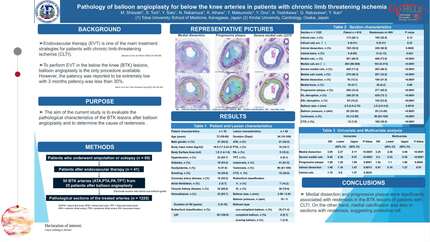
Antithrombotic treatment following revascularization for chronic limb-threatening ischaemia: a scientific statement of the European Society of Cardiology Working Group on Aorta and Peripheral Vascular Diseases and the European Society of Cardiology Working Group on Cardiovascular Pharmacotherapy
European Heart Journal


Abstract
Chronic limb-threatening ischaemia (CLTI) is defined as ischaemic rest pain, or non-healing ulceration, requiring endovascular or surgical lower limb revascularization (LLR). Lower limb revascularization in CLTI entails a high risk of major adverse limb events (MALE) and major adverse cardiovascular events (MACE). This scientific statement addresses this risk based on a systematic review. A structured literature search was performed, and articles were independently evaluated by two investigators. In total, 1678 articles were identified, of which 34 were included in the final analysis. Only three randomized controlled trials (RCTs) addressed antithrombotic therapy in CLTI following LLR. None of these demonstrated superiority of any antithrombotic regimen over the other. Eight RCTs investigated antithrombotic therapy following LLR in populations with peripheral arterial disease including CLTI subgroups and suggest a benefit of dual antiplatelet therapy on limb events. One large RCT demonstrated that dual pathway inhibition with aspirin and vascular-dose rivaroxaban reduced the risk of MALE, MACE, and unplanned target limb revascularization. Data from 22 observational studies suggest a benefit of dual antiplatelet therapy on overall survival and amputation-free survival after LLR as compared with single antiplatelet therapy. Intensified antithrombotic treatment should be proposed in patients with CLTI following LLR to reduce the risk of MALE and MACE. Randomized controlled trials on antithrombotic therapy in patients with CLTI following LLR are scarce. Dual pathway inhibition is the only regimen for which an RCT demonstrated a reduction of MALE and MACE following LLR. Dual antiplatelet therapy appears to be associated with a reduced risk of MALE in CLTI following LLR.
Contributors



Lucia Mazzolai
Author
Alessandra Bura-Riviere
Author

Christian Heiss
Author
University of Surrey Guildford , United Kingdom of Great Britain & Northern Ireland


Sabine Steiner
Author
Marianne Brodmann
Author
Victor Aboyans
Author

You may be interested in