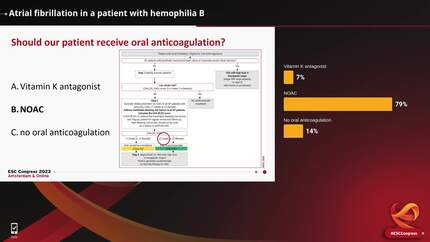
Management of patients with congenital bleeding disorders and cardiac indications for antithrombotic therapy A clinical consensus statement of the ESC Working Group on Thrombosis, the Association for Acute CardioVascular Care (ACVC), European Association of Percutaneous Cardiovascular Interventions (EAPCI), European Heart Rhythm Association (EHRA) of the ESC, the ESC Working Group on Cardiovascular Pharmacotherapy and the European Association for Haemophilia and Allied Disorders (EAHAD)
European Heart Journal - Cardiovascular Pharmacotherapy


Abstract
Cardiologists have only had rare exposure to haemophilia patients and patients with other congenital bleeding disorders during the last decades, as these patients had a reduced life expectancy and were partly protected against thrombosis due to the bleeding disorder. With the availability of effective and safe replacement therapies of clotting factors, the average life expectancy in these populations of patients has significantly increased, and thrombotic complications may occur.
The European Society of Cardiology Working Group on Thrombosis has taken the initiative to broaden the spectrum of these haematological conditions to include patients with a larger variety of
Of importance, an individualized approach to antithrombotic therapy is warranted to properly balance the two risks of thrombosis and bleeding. Adoption of the safest interventional techniques, reduction of the intensity and/or duration of antithrombotic therapies, and attention to the safe levels of clotting factors is generally advised.
Contributors


Christophe Vandenbriele
Author
Stefan Agewall
Author


Diana A Gorog
Author
Pål A Holme
Author
Konstantin A Krychtiuk
Author
Bianca Rocca
Author
Jolanta M Siller-Matula
Author
Marco Valgimigli
Author
Andrea Rubboli
Author
Robert Klamroth
Author
You may be interested in