Clinical profile and outcomes among patients with cardiac implantable electronic device presenting as isolated pocket infection, pocket-related infective endocarditis, or lead-related infective endocarditis
EP Europace Journal


Abstract
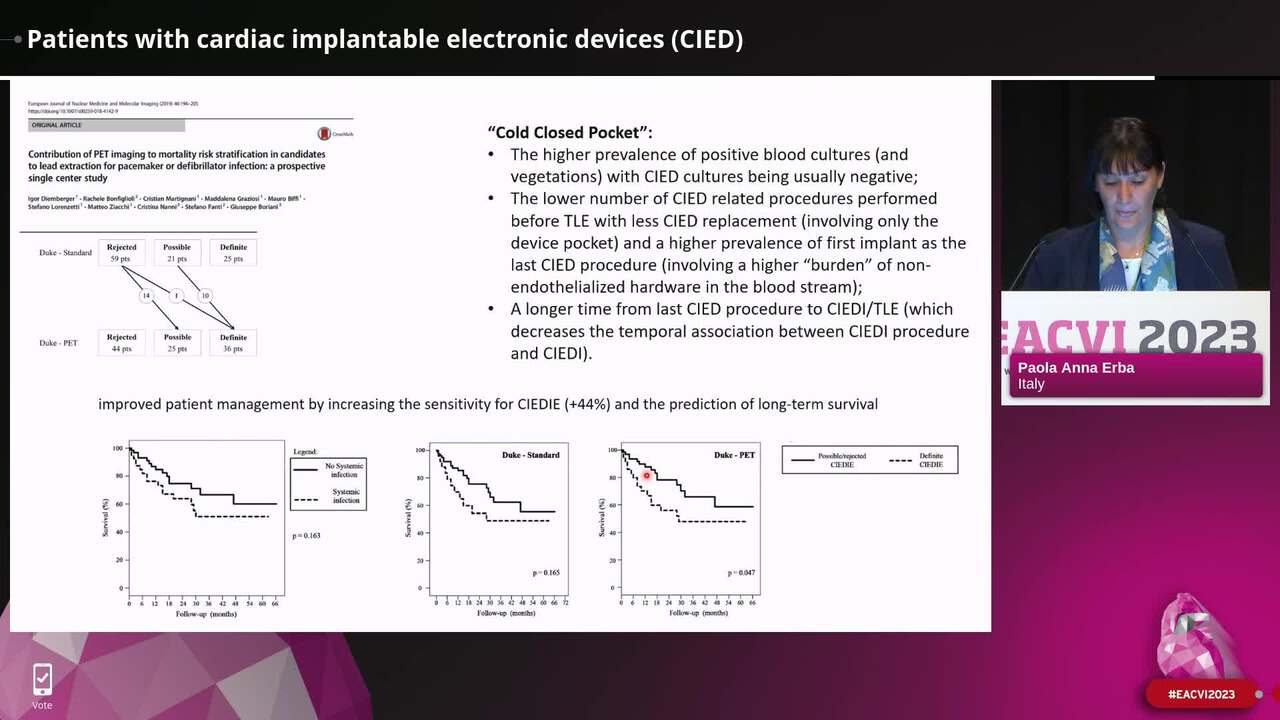
The clinical spectrum of cardiac implantable electronic device (CIED) infections includes isolated pocket infection (IPI), pocket infection complicated by infective endocarditis (PIRIE), and lead-related infective endocarditis (LRIE). The aim of this study was to assess the risk factors, clinical course, and outcomes in patients with CIED infections and to demonstrate differences between PIRIE and LRIE.
The retrospective analysis of data from 3847 patients undergoing transvenous lead extraction for non-infectious (2640; 68.62%) and infectious (1207; 31.38%) indications, including 361 (29.91%) IPI, 472 (39.11%) PIRIE, and 374 (30.99%) LRIE, showed some differences in risk factors, clinical course, and outcomes between the subgroups. Unlike PIRIE, diabetes [hazard ratio (HR) = 1.488; 95% confidence interval (CI; 1.178–1.879),
Cardiac implantable electronic device infections share common risk factors; however, diabetes and intra-cardiac lead abrasion predispose to LRIE, whereas multiple leads and
Contributors


You may be interested in