Occurrence of premature battery depletion in a large multicentre registry of subcutaneous cardioverter-defibrillator patients
EP Europace Journal


Abstract
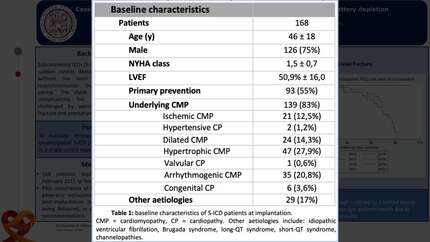
Subcutaneous implantable cardioverter-defibrillators (S-ICDs) have become established in preventing sudden cardiac death, with some advantages over transvenous defibrillator systems, including a lower incidence of lead failures. Despite technological advancements, S-ICD carriers may suffer from significant complications, such as premature battery depletion (PBD), that led to an advisory for nearly 40 000 patients. This multicentre study evaluated the incidence of PBD in a large set of S-ICD patients.
Data from patients implanted with S-ICD models A209 and A219 between October 2012 and July 2023 across nine centres in Europe and the USA were reviewed. Incidence and implications of PBD, defined as clinically observed sudden drop in battery longevity, were analysed and compared to PBD with the definition of battery depletion within 60 months. Prospectively collected clinical data were obtained retrospectively from medical records, device telemetry, and manufacturer reports. This registry is listed on
This manufacturer-independent analysis highlights a notable incidence of PBD in patients equipped with S-ICD models under advisory, and the rate of PBD in this study corresponds to the rate currently estimated by the manufacturer. To the best of our knowledge, this provides the largest contemporary peer-reviewed study cohort investigating the actual incidence of PBD in S-ICD patients. These findings emphasize the importance of post-market registries in collaboration between clinicians and the manufacturer to optimize safety and efficacy in S-ICD treatment.
Contributors

Jonas Wörmann
Author

Stjepan Jurisic
Author
Kara Stout
Author
Mohamed Elrefai
Author
Basildon University Hospital Basildon , United Kingdom of Great Britain & Northern Ireland

Beat Schaer
Author
Antonius van Stipdonk
Author
Neil T Srinivasan
Author
Sylvain Ploux
Author
Alexander Breitenstein
Author
Jordana Kron
Author
Paul R Roberts
Author
Tobias Toennis
Author
Dominik Linz
Author
Rajdip Dulai
Author
Julia Hermes-Laufer
Author
Jay Koneru
Author

Sebastian Dittrich
Author
Jan-Hendrik van den Bruck
Author
Jan-Hendrik Schipper
Author

Kerstin D Rosenberger
Author
Daniel Steven
Author

You may be interested in