Antithrombotic treatment and major adverse cardiac events after bleeding in patients with myocardial infarction: a retrospective analysis of nationwide registry data
European Heart Journal - Cardiovascular Pharmacotherapy


Abstract
The aim of this study was to describe the use of antithrombotic therapy following a bleeding event among patients with myocardial infarction (MI), and the associated risk of major adverse cardiac events (MACE).
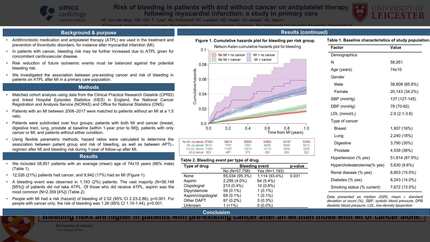
Using Danish nationwide registries, patients hospitalized with a bleeding event within 1 year after MI were identified. Antithrombotic treatment with aspirin, clopidogrel, and/or vitamin K antagonists (VKA) was determined at the bleeding and at Day 90 and 180 post-bleed. Based on guidelines, patients were stratified into four groups: expected, reduced, discontinued, or intensified treatment. Risk of MACE (ischaemic stroke, MI, or death) within the first year was assessed by Cox proportional hazard models. A total of 3324 patients with a bleeding after MI were included. At Day 90 post-bleed, 1052 (31.7%) received expected antithrombotic treatment, 1301 (39.2%) reduced, 164 (4.9%) intensified, and 807 (24.3%) no treatment. Major adverse cardiac events occurred in 637 (19.2%) patients. With dual antiplatelet therapy as reference, adjusted hazard ratios for MACE were: aspirin 1.81 (1.06–3.09), clopidogrel 1.08 (0.64–1.82), VKA 1.08 (0.47–2.48), VKA + aspirin 1.97 (0.95–4.07), VKA + clopidogrel 0.26 (0.03–1.91), triple 1.73 (0.50–5.95), and no treatment 1.93 (1.11–3.36).
The majority of MI patients reduced or discontinued their antithrombotic therapy post-bleed. Patients in monotherapy with aspirin or no treatment post-bleed had a higher risk of MACE Further studies of optimal antithrombotic treatments after a bleed are needed.
Contributors

Hafsah Nabi
Author
Rasmus Rørth
Author
Daniel H Tajchman
Author
Lene Holmvang
Author
Christian Torp-Pedersen
Author

Emil L Fosbøl
Author
Lars Køber
Author
You may be interested in