The search for optimal antithrombotic therapy in transcatheter aortic valve implantation: facts and uncertainties
European Heart Journal


Abstract
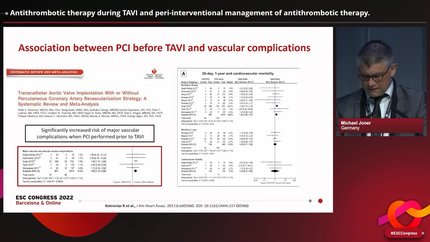
Transcatheter aortic valve implantation (TAVI) is a minimally invasive procedure, which is used frequently in patients with symptomatic severe aortic valve stenosis. Most patients undergoing TAVI are over 80 years of age with a high bleeding as well as thrombotic risk. Despite the increasing safety of the procedure, thromboembolic events [stroke, (subclinical) valve thrombosis] remain prevalent. As a consequence, antithrombotic prophylaxis is routinely used and only recently new data on the efficacy and safety of antithrombotic drugs has become available. On the other hand, these antithrombotic drugs increase bleeding in a population with unique aortic stenosis-related bleeding characteristics (such as acquired von Willebrand factor defect and angiodysplasia). In this review, we discuss the impact of thromboembolic and bleeding events, the current optimal antithrombotic therapy based on registries and recent randomized controlled trials, as well as try to give a practical guide how to treat these high-risk patients. Finally, we discuss knowledge gaps and future research needed to fill these gaps.
Contributors




You may be interested in