Impact of empagliflozin on decongestion in acute heart failure: the EMPULSE trial
European Heart Journal


Abstract
Effective and safe decongestion remains a major goal for optimal management of patients with acute heart failure (AHF). The effects of the sodium–glucose cotransporter 2 inhibitor empagliflozin on decongestion-related endpoints in the EMPULSE trial (NCT0415775) were evaluated.
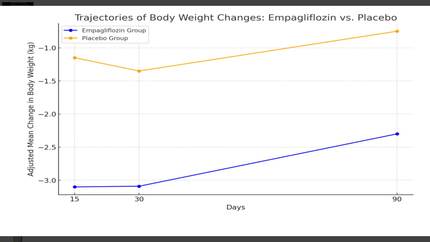
A total of 530 patients hospitalized for AHF were randomized 1:1 to either empagliflozin 10 mg once daily or placebo for 90 days. The outcomes investigated were: weight loss (WL), WL adjusted for mean daily loop diuretic dose (WL-adjusted), area under the curve of change from baseline in N-terminal pro-B-type natriuretic peptide levels, hemoconcentration, and clinical congestion score after 15, 30, and 90 days of treatment. Compared with placebo, patients treated with empagliflozin demonstrated significantly greater reductions in all studied markers of decongestion at all time-points, adjusted mean differences (95% confidence interval) at Days 15, 30, and 90 were: for WL −1.97 (−2.86, −1.08), −1.74 (−2.73, −0.74); −1.53 (−2.75, −0.31) kg; for WL-adjusted: −2.31 (−3.77, −0.85), −2.79 (−5.03, −0.54), −3.18 (−6.08, −0.28) kg/40 mg furosemide i.v. or equivalent; respectively (all
Initiation of empagliflozin in patients hospitalized for AHF resulted in an early, effective and sustained decongestion which was associated with clinical benefit at Day 90.
Contributors


Adriaan A Voors
Author
Sean P Collins
Author
Mikhail N Kosiborod
Author

John R Teerlink
Author
San Francisco Veterans Affairs Medical Centre San Francisco , United States of America

Jasper Tromp
Author
Joao Pedro Ferreira
Author
Michael E Nassif
Author
Mitchell A Psotka
Author

Afshin Salsali
Author
Jonathan P Blatchford
Author

You may be interested in