Sirtuin 5 promotes arterial thrombosis by blunting the fibrinolytic system

Cardiovascular Research

15 September 2020
Organised by: Logo
ESC Journals

Abstract

AbstractAims

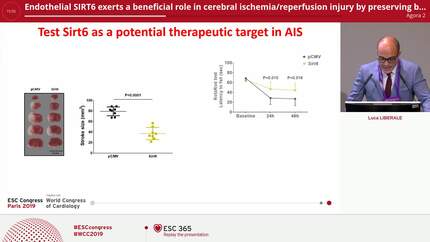
Arterial thrombosis as a result of plaque rupture or erosion is a key event in acute cardiovascular events. Sirtuin 5 (SIRT5) belongs to the lifespan-regulating sirtuin superfamily and has been implicated in acute ischaemic stroke and cardiac hypertrophy. This project aims at investigating the role of SIRT5 in arterial thrombus formation.

Methods and results

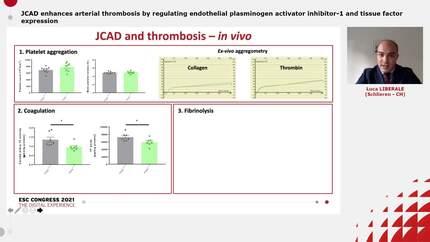
Sirt5 transgenic (Sirt5Tg/0) and knock-out (Sirt5−/−) mice underwent photochemically induced carotid endothelial injury to trigger arterial thrombosis. Primary human aortic endothelial cells (HAECs) were treated with SIRT5 silencing-RNA (si-SIRT5) as well as peripheral blood mononuclear cells from acute coronary syndrome (ACS) patients and non-ACS controls (case–control study, total n = 171) were used to increase the translational relevance of our data. Compared to wild-type controls, Sirt5Tg/0 mice displayed accelerated arterial thrombus formation following endothelial-specific damage. Conversely, in Sirt5−/− mice, arterial thrombosis was blunted. Platelet function was unaltered, as assessed by ex vivo collagen-induced aggregometry. Similarly, activation of the coagulation cascade as assessed by vascular and plasma tissue factor (TF) and TF pathway inhibitor expression was unaltered. Increased thrombus embolization episodes and circulating D-dimer levels suggested augmented activation of the fibrinolytic system in Sirt5−/− mice. Accordingly, Sirt5−/− mice showed reduced plasma and vascular expression of the fibrinolysis inhibitor plasminogen activator inhibitor (PAI)-1. In HAECs, SIRT5-silencing inhibited PAI-1 gene and protein expression in response to TNF-α. This effect was mediated by increased AMPK activation and reduced phosphorylation of the MAP kinase ERK 1/2, but not JNK and p38 as shown both in vivo and in vitro. Lastly, both PAI-1 and SIRT5 gene expressions are increased in ACS patients compared to non-ACS controls after adjustment for cardiovascular risk factors, while PAI-1 expression increased across tertiles of SIRT5.

Conclusion

SIRT5 promotes arterial thrombosis by modulating fibrinolysis through endothelial PAI-1 expression. Hence, SIRT5 may be an interesting therapeutic target in the context of atherothrombotic events.

Contributors

Luca Liberale
Luca Liberale

Author

University of Genoa Genova , Italy

Alexander Akhmedov
Alexander Akhmedov

Author

University of Zurich Zurich , Switzerland

Yustina M Puspitasari

Author

University of Zurich Schlieren , Switzerland

Francesco Paneni
Francesco Paneni

Author

University Heart Center Zurich , Switzerland

Frank Ruschitzka
Frank Ruschitzka

Author

University Hospital Zurich Zurich , Switzerland

Fabrizio Montecucco
Fabrizio Montecucco

Author

University of Genoa - Department of Health Sciences Genoa , Italy

Konstantinos Stellos

Author

University of Heidelberg Heidelberg , Germany

ESC 365 is supported by