
Doctor Yustina Maria Puspitasari
University of Zurich, Schlieren (Switzerland)
Membership:
ESC Professional Member
Biography
Dr. Yustina Maria Puspitasari earned her MD from Universitas Brawijaya in Indonesia, where she also worked as an emergency physician for few years in East Java and West Borneo. Motivated by a strong interest in vascular biology and translational cardiovascular research, she moved to Europe, where she ended up pursuing her doctoral training at the University of Zurich, Switzerland. There, she investigated the mechanisms of vascular aging, inflammation, and endothelial dysfunction under the mentorship of Prof. Giovanni G. Camici.
Currently, she is cuntinuing her work at the University of Zurich as a postdoctoral researcher focusing on the sex-specific mechanisms of atherosclerotic cardiovascular disease. Her scientific interests lie at the intersection of vascular biology, cellular communication, and sex-based precision medicine.

Contributor content

Presentation

Presentation

Presentation
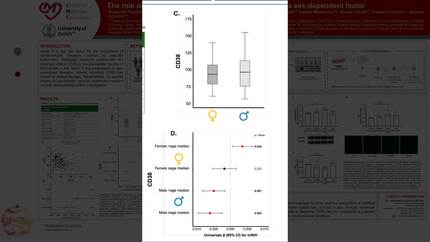
Sex differences in atherosclerotic cardiovascular disease: the role of plasma extracellular vesicles
Presentation
Presentation

Presentation

Presentation

Presentation
MMP-2 gene silencing attenuates age-dependent carotid stiffness via reduction of elastin degradation and increased eNOS activation

Presentation

