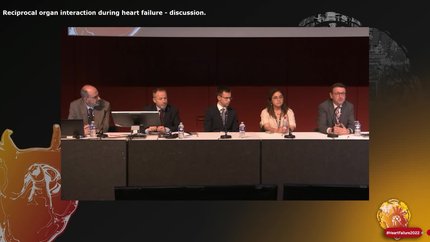
Reciprocal organ interactions during heart failure: a position paper from the ESC Working Group on Myocardial Function
Cardiovascular Research


Abstract
Heart failure—either with reduced or preserved ejection fraction (HFrEF/HFpEF)—is a clinical syndrome of multifactorial and gender-dependent aetiology, indicating the insufficiency of the heart to pump blood adequately to maintain blood flow to meet the body’s needs. Typical symptoms commonly include shortness of breath, excessive fatigue with impaired exercise capacity, and peripheral oedema, thereby alluding to the fact that heart failure is a syndrome that affects multiple organ systems. Patients suffering from progressed heart failure have a very limited life expectancy, lower than that of numerous cancer types. In this position paper, we provide an overview regarding interactions between the heart and other organ systems, the clinical evidence, underlying mechanisms, potential available or yet-to-establish animal models to study such interactions and finally discuss potential new drug interventions to be developed in the future. Our working group suggests that more experimental research is required to understand the individual molecular mechanisms underlying heart failure and reinforces the urgency for tailored therapeutic interventions that target not only the heart but also other related affected organ systems to effectively treat heart failure as a clinical syndrome that affects and involves multiple organs.
Contributors


Dana Dawson
Author
Inês Falcao-Pires
Author

Mauro Giacca
Author
King's College London London , United Kingdom of Great Britain & Northern Ireland
Nazha Hamdani
Author
Stéphane Heymans
Author
Astrid Hooghiemstra
Author

Dorien Hermkens
Author


Jolanda van der Velden
Author
Amsterdam University Medical Centre (AUMC) Amsterdam , Netherlands (The)
Serena Zacchigna
Author

Thomas Thum
Author
Institute for Molecular and Translational Therapeutic Strategies (IMTTS) Hannover , Germany
You may be interested in