Cardiovascular disease and COVID-19: a consensus paper from the ESC Working Group on Coronary Pathophysiology & Microcirculation, ESC Working Group on Thrombosis and the Association for Acute CardioVascular Care (ACVC), in collaboration with the European Heart Rhythm Association (EHRA)
Cardiovascular Research


Abstract
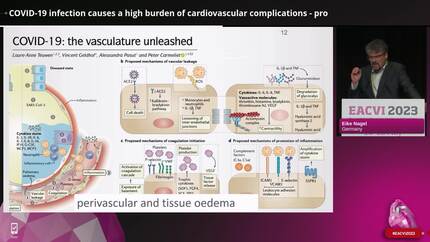
The cardiovascular system is significantly affected in coronavirus disease-19 (COVID-19). Microvascular injury, endothelial dysfunction, and thrombosis resulting from viral infection or indirectly related to the intense systemic inflammatory and immune responses are characteristic features of severe COVID-19. Pre-existing cardiovascular disease and viral load are linked to myocardial injury and worse outcomes. The vascular response to cytokine production and the interaction between severe acute respiratory syndrome coronavirus-2 (SARS-CoV-2) and angiotensin-converting enzyme 2 receptor may lead to a significant reduction in cardiac contractility and subsequent myocardial dysfunction. In addition, a considerable proportion of patients who have been infected with SARS-CoV-2 do not fully recover and continue to experience a large number of symptoms and post-acute complications in the absence of a detectable viral infection. This conditions often referred to as ‘post-acute COVID-19’ may have multiple causes. Viral reservoirs or lingering fragments of viral RNA or proteins contribute to the condition. Systemic inflammatory response to COVID-19 has the potential to increase myocardial fibrosis which in turn may impair cardiac remodelling. Here, we summarize the current knowledge of cardiovascular injury and post-acute sequelae of COVID-19. As the pandemic continues and new variants emerge, we can advance our knowledge of the underlying mechanisms only by integrating our understanding of the pathophysiology with the corresponding clinical findings. Identification of new biomarkers of cardiovascular complications, and development of effective treatments for COVID-19 infection are of crucial importance.
Contributors

Davor Milicic
Author


Danijela Trifunovic-Zamaklar
Author
Zorana Vasiljevic-Pokrajcic
Author


Lina Badimon
Author
Gemma Vilahur
Author
Dimitris Tousoulis
Author


Giuseppe De Luca
Author
Cor de Wit
Author
Geneviève Derumeaux
Author
Maria Dorobantu
Author

Etto C Eringa
Author

Diana A Gorog
Author
National Heart and Lung Institute Imperial College London , United Kingdom of Great Britain & Northern Ireland

Frank R Heinzel
Author
Kurt Huber
Author
Olivia Manfrini
Author
You may be interested in