Psychiatric comorbidity and disparities in the invasive management of acute myocardial infarction: a national analysis, 2016–23
EHJ - Open


Abstract
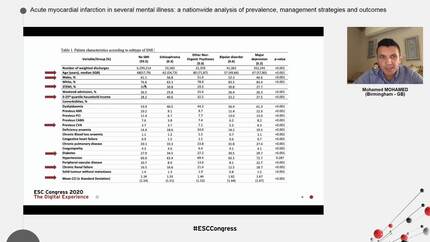
Mental health disorders (MHDs) are common in acute myocardial infarction (AMI) and have been associated with less intensive cardiac care. We examined trends in five MHDs and their adjusted associations with in-hospital mortality, mechanical circulatory support (MCS), and coronary revascularization.
We analysed the National Inpatient Sample, 2016–23, including adult hospitalizations with a principal diagnosis of AMI [ICD-10-CM I21.x/I22.x, excluding type 2 myocardial infarction (MI)]; five MHDs were identified from secondary diagnoses. Survey-weighted logistic regression produced adjusted odds ratios (aORs), adjusting for demographics, hospital characteristics, MI type, and 19 comorbidities, with all five MHDs entered simultaneously. Sensitivity analyses were restricted to hospitalizations without prior MI, percutaneous coronary intervention, or coronary artery bypass grafting. Among 970 969 AMI hospitalizations, prevalence rose for every MHD except schizophrenia/psychotic disorders, most steeply for PTSD (Post-traumatic stress disorder). Schizophrenia/psychotic disorders had the lowest adjusted odds of revascularization [aOR, 0.56; 95% confidence interval, 0.53–0.60] and invasive management (0.52; 0.49–0.55), followed by bipolar disorder (revascularization 0.81; 0.78–0.85); MCS associations were attenuated after adjustment. Restricted to those without prior coronary disease, the schizophrenia deficit was larger (0.54; 0.50–0.57) than among those with prior coronary disease (0.67; 0.60–0.74; interaction
Schizophrenia and other psychotic disorders were consistently associated with markedly lower odds of invasive evaluation and coronary revascularization after AMI, with the largest deficit at first presentation. These findings highlight a potentially modifiable gap in cardiovascular care.
Contributors


Vikasa Godishala
Author
Divyasri Koneru
Author
Siddharth Karipineni
Author
Simran Tanna
Author
Nishant Patel
Author
Dhairya Nanavaty
Author

Cesar Ayala-Rodriguez
Author
Sarath Reddy
Author
Magnus Back
Author
You may be interested in