Pulmonary hypertension during exercise underlies unexplained exertional dyspnoea in patients with Type 2 diabetes
European Journal of Preventive Cardiology


Abstract
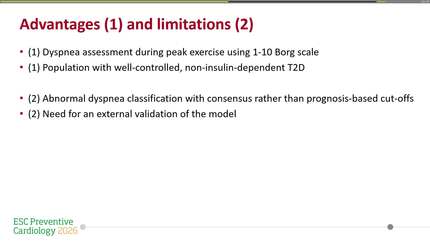
To compare the cardiac function and pulmonary vascular function during exercise between dyspnoeic and non-dyspnoeic patients with Type 2 diabetes mellitus (T2DM).
Forty-seven T2DM patients with unexplained dyspnoea and 50 asymptomatic T2DM patients underwent exercise echocardiography combined with ergospirometry. Left ventricular (LV) function [stroke volume, cardiac output (CO), LV ejection fraction, systolic annular velocity (s′)], estimated LV filling pressures (E/e′), mean pulmonary arterial pressures (mPAPs) and mPAP/COslope were assessed at rest, low- and high-intensity exercise with colloid contrast. Groups had similar patient characteristics, glycemic control, stroke volume, CO, LV ejection fraction, and E/e′ (
Pulmonary hypertension and less LV systolic reserve detected by exercise echocardiography with colloid contrast underlie unexplained exertional dyspnoea and reduced exercise capacity in T2DM.
Contributors

Lisa Van Ryckeghem
Author
Siddharth Jogani
Author
Ines Frederix
Author
Elise Bakelants
Author

Sarah Stroobants
Author

Virginie Bito
Author
Lieven Herbots
Author
Dominique Hansen
Author

You may be interested in