Association of reproductive factors with cardiovascular disease risk in pre-menopausal women: nationwide population-based cohort study
European Journal of Preventive Cardiology


Abstract
Although the morbidity and mortality of cardiovascular diseases (CVD) are rising in young women, the risk factors of CVD among Korean pre-menopausal women have not been intensively investigated.
To determine how age at menarche and other female reproductive factors are associated with the risk of CVD in pre-menopausal women.
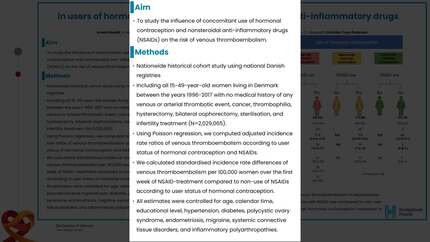
A total of 1 088 992 pre-menopausal women who participated in health screening in 2009 were included. The study outcomes were myocardial infarction (MI) and ischaemic stroke. Cox proportional hazards regression analysis was conducted with adjustment of traditional CVD risk factors and reproductive factors.
Mean age was 43.8 ± 5.3 years (98.9%, < 55 years), 3.5% were current smokers, and 1.2% were heavy drinkers. During a mean follow-up of 8.3years [9 032 685.9 person-years (PY)], there were 10 876 CVD events (1.0 per 1000 PY).With later menarche, the risk of CVD increased; ≤12 years [adjusted hazard ratio (HR) 1.04, 95% confidence interval 0.93–1.16], 13 years (reference), 14 years (1.06, 0.98–1.14), 15 years (1.15, 1.07–1.24), 16 years (1.23, 1.14–1.34), and ≥17 years (1.33, 1.24–1.44). Compared with non-users, oral contraceptives (OC) users (≥1 year) had an increased risk of CVD (1.11, 1.01–1.22) (
Later menarche than the mean age at menarche (13 years old) and the use of OC (≥1 year) were associated with a higher risk of CVD, after adjusting for traditional cardiovascular risk factors. This study suggests that female reproductive factors could be unique risk factors for CVD in pre-menopausal women.
Contributors

Su-Min Jeong
Author
Keun Hye Jeon
Author
Wonyoung Jung
Author
Jung Eun Yoo
Author
Juhwan Yoo
Author
Kyungdo Han
Author
Ju Youn Kim
Author
Dong-Yun Lee
Author
You-Bin Lee
Author
You may be interested in