Prevalence and determinants of asymmetric septal hypertrophy (ASH) in diseases of left ventricular hypertrophy (LVH)
European Heart Journal - Cardiovascular Imaging


Abstract
To determine the prevalence of asymmetric septal hypertrophy (ASH) across health and in diseases associated with left ventricular hypertrophy (LVH), including hypertrophic cardiomyopathy (HCM).
We analysed two complementary datasets. First, a large UK Biobank healthy reference cohort (
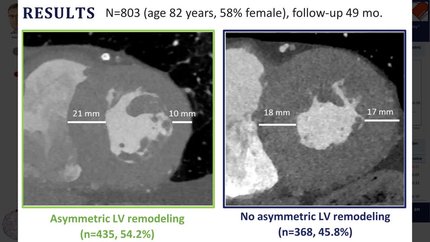
ASH is a common but non-specific finding in diseases associated with LVH. Septal asymmetry increases with age and body-size and is more pronounced in women. After adjusting for age, sex, and body-size, disproportionate septal asymmetry was most characteristic of HCM.
Contributors

Hunain Shiwani
Author
University College London London , United Kingdom of Great Britain & Northern Ireland

João Augusto
Author

Constantin-Cristian Topriceanu
Author
University College London London , United Kingdom of Great Britain & Northern Ireland
Adam Ioannou
Author
Stefania Rosmini
Author
Viviana Maestrini
Author
Rebecca Hughes
Author
Kristopher Knott
Author
Anish Bhuva
Author
Benjamin Dowsing
Author
Jessica Artico
Author
Iain Pierce
Author
Thomas Treibel
Author
James Howard
Author
Charlotte Manisty
Author
Peter Kellman
Author
Rebecca Kozor
Author
Richard Steeds
Author
Gabriella Captur
Author
Saidi Mohiddin
Author
Luis Lopes
Author
Marianna Fontana
Author

Rhodri Davies
Author
You may be interested in