Impact of rate-pressure product correction of myocardial blood flow on the prognostic relevance in patients with heart failure
European Heart Journal - Cardiovascular Imaging


Abstract
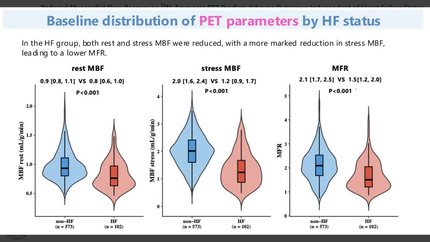
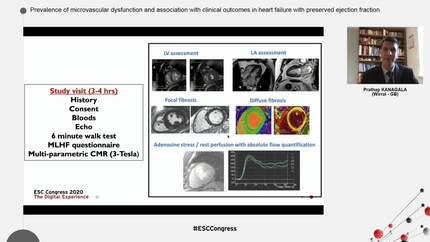
Quantitative perfusion cardiac magnetic resonance (QP-CMR) allows estimation of myocardial blood flow (MBF) and myocardial perfusion reserve (MPR). Resting MBF values are often corrected for the rate-pressure product (RPP). We aimed to assess the effect of RPP correction on MBF values and the prognostic value of QP-CMR in patients with heart failure (HF).
QP-CMR data from 641 prospectively recruited patients with HF and 184 healthy volunteers were analysed. Rest MBF was corrected for RPP (MBFcorr = rest MBFuncorr×10 000/RPP). Corrected MPR was defined as uncorrected stress MBF/rest MBFcorr. The primary endpoint was a composite of heart failure hospitalization (HFH) and all-cause mortality. RPP correction increased rest MBF and decreased MPR to a greater extent in healthy volunteers than in patients. During median follow-up of 3.5 years, 101 events occurred (55 deaths and 46 HFH). Patients who reached the primary endpoint had significantly higher rest MBFuncorr and lower MPRuncorr. Rest MBFuncorr (adjusted hazard ratio per 1 mL/g/min increase, 3.97, 95% confidence interval [CI] 1.93–8.16,
Uncorrected rest MBF and MPR by QP-CMR are independently predictive of adverse outcomes in patients with HF. RPP correction changes MBF and MPR values and attenuates their predictive value.
Contributors

Thomas Anderton
Author
Leeds Teaching Hospitals NHS Trust Leeds , United Kingdom of Great Britain & Northern Ireland
Bradley Chambers
Author
Maryum Farooq
Author
Chin Yit Soo
Author
Mehak Asad
Author
Michelle Gibbs
Author
Peter Harrison
Author
Osama Tariq
Author
Wasim Javed
Author
Erica Dall'Armellina
Author
Peter Kellman
Author

Peter P Swoboda
Author
Leeds Institute of Cardiovascular and Metabolic Medicine Leeds , United Kingdom of Great Britain & Northern Ireland
Masafumi Takafuji
Author
You may be interested in