Temporal changes in guideline-directed medical therapy score and clinical outcomes in patients with heart failure
European Heart Journal - Quality of Care and Clinical Outcomes


Abstract
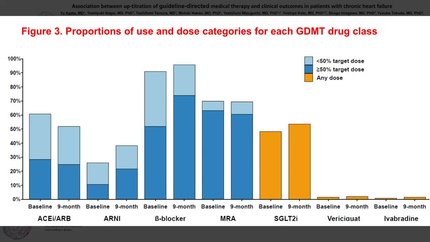
Optimization of guideline-directed medical therapy (GDMT) is a cornerstone of management in heart failure (HF). The GDMT scoring system was developed to quantify both the use and intensification of GDMT. This study investigated the longitudinal changes in the GDMT score and its association with clinical outcomes in contemporary practice.
This multicentre prospective cohort study included 680 patients with chronic HF with reduced ejection fraction. The patients were classified into the uptitration (
In this contemporary chronic HF cohort, the GDMT score incorporating guideline-recommended drugs revealed suboptimal implementation and intensification of GDMT over 9 months. Greater increases in GDMT score were associated with improved clinical outcomes, supporting the clinical relevance of longitudinal GDMT optimization.
Contributors

Toshifumi Tamura
Author

Motoki Nakao
Author
Yoshifumi Mizuguchi
Author
Taro Koya
Author
Atsushi Tada
Author
Fusako George
Author
Isao Yokota
Author
Yoshiya Kato
Author
Shogo Imagawa
Author
Yusuke Tokuda
Author
Masashige Takahashi
Author
Junichi Matsumoto
Author
Ko Motoi
Author
Yutaka Wakamatsu
Author
Masaharu Machida
Author
Takahiko Saito
Author
Toshihisa Anzai
Author
You may be interested in