When cancer therapy raises the pressure: predictors of early hypertension with VEGFR inhibitors
European Heart Journal Supplements


Abstract
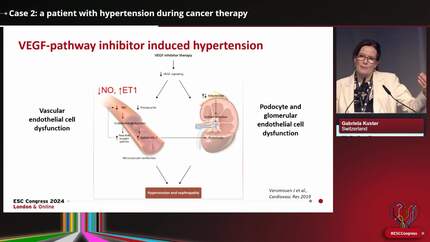
Hypertension (HTN) is a recognized cardiotoxicity in cancer patients treated with vascular endothelial growth factor receptor inhibitors (VEGFRIs), yet VEGFRI-induced HTN remains poorly characterized. This study evaluated outcomes, predictive factors, and potential protective mechanisms for HTN in patients receiving VEGFRIs.
We retrospectively reviewed 290 patients treated with axitinib, cabozantinib, lenvatinib, or pazopanib (2015–2023), analyzing demographics, comorbidities, and antihypertensive management. Patients were stratified by presence of hypertension toxicity (HTN-TOX), defined as initiation or escalation of antihypertensive therapy within 30 days of VEGFRI start. Outcomes included major cardiovascular events and mortality. Multivariable logistic regression identified independent predictors.
Fifty-nine patients (20%) developed HTN-TOX. Baseline systolic blood pressure was modestly higher in the HTN-TOX group (135±16 vs 130±16 mmHg, p = 0.044) and remained significantly elevated at one month (141±21 vs 132±19 mmHg, p = 0.002). Baseline demographics, comorbidities, and cancer therapy were otherwise similar, with a non-significant trend toward more baseline HTN in the HTN-TOX group (83% vs 74%, p = 0.18). On univariate analysis, HTN-TOX was associated with greater thiazide use (36% vs 19%, p = 0.009) and trended toward higher ACEI/ARB use (63% vs 52%, p = 0.18). Kaplan–Meier survival (p = 0.13) and incidence of stroke, myocardial infarction, or heart failure did not differ. On multivariable analysis, smoking independently predicted risk for HTN-TOX (OR 2.45, 95% CI 1.25–4.88, p = 0.009), while ≥1 baseline antihypertensive was protective (OR 0.27, 95% CI 0.11–0.63, p = 0.003).
HTN-TOX occurred in one-fifth of patients within 30 days of VEGFRI initiation. Smoking was an independent risk factor, while baseline antihypertensive therapy was protective. These findings support optimizing blood pressure control before VEGFRI therapy and highlight the need for further studies to define preventive strategies and clarify clinical implications.
Clinical Implications: VEGFRI-associated hypertension develops quickly and affects a significant subset of patients, underscoring the importance of proactive blood pressure monitoring and management. Identifying smoking as a risk factor and baseline antihypertensive therapy as protective suggests that targeted risk reduction and optimization of antihypertensive regimens before treatment may improve patient safety. Kaplan Meier Survival Analysis Forest Plot of Hypertension Predictors
Contributors

N M Nigel Miller
Author
T S Teonna Sharpe
Author
N P Nooruddin Pracha
Author
N P Najhee Purdy
Author
S A S Sakima A Smith
Author
You may be interested in