Case report: fulminant myocarditis with biopsy-proven eosinophilic infiltration and burned-out myocardial pathology at autopsy
European Heart Journal - Case Reports


Abstract
Fulminant myocarditis causes severe haemodynamic instability, requiring mechanical or inotropic support. In this setting, early endomyocardial biopsy is crucial to identify specific subtypes like eosinophilic or giant cell myocarditis, which require immediate and targeted immunosuppressive intervention.
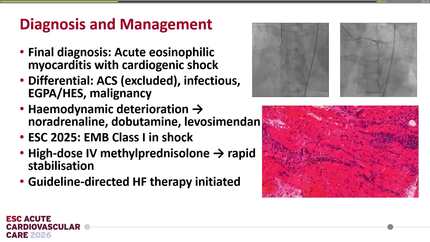
A 54-year-old female patient presented to a local clinic with several days of fever and dyspnoea, presenting in a state of shock with markedly elevated cardiac enzymes. Although electrocardiography and transthoracic echocardiography findings initially suggested acute myocardial infarction, coronary angiography revealed no significant stenosis. Consequently, fulminant myocarditis was suspected. Following cardiac arrest and initiation of venoarterial extracorporeal membrane oxygenation and Impella CP, she was transferred to our hospital. Endomyocardial biopsy revealed myocardial necrosis with inflammatory cell infiltration, including prominent degranulating eosinophils, consistent with eosinophilic myocarditis. Despite steroid pulse therapy and escalation of immunosuppression with tacrolimus and mycophenolate mofetil, the patient developed persistent electrical silence without mechanical recovery and died. Autopsy revealed near-complete loss of viable cardiomyocytes with chronic inflammation and interstitial fibrosis, consistent with burned-out myocardial pathology.
This case highlights the devastating nature of fulminant myocarditis, specifically when characterized by extensive and irreversible cardiomyocyte destruction. Once massive myocardial loss has occurred, conventional interventions—including mechanical circulatory support and intensive immunosuppressive therapy—may reach their therapeutic limits. This clinical-pathological correlation underscores the critical necessity of early risk stratification to identify patients at risk for profound tissue damage. Moving forward, refining strategies for timely therapeutic escalation and establishing realistic clinical goals remain pivotal challenges in the management of this lethal pathophysiology.
Contributors

Rui Katano
Author
Atsushi Tada
Author
Hirokazu Sugino
Author

Toshihisa Anzai
Author
Doralisa Morrone
Author
Jabir Abdullakutty
Author
Deepti Ranganathan
Author
You may be interested in