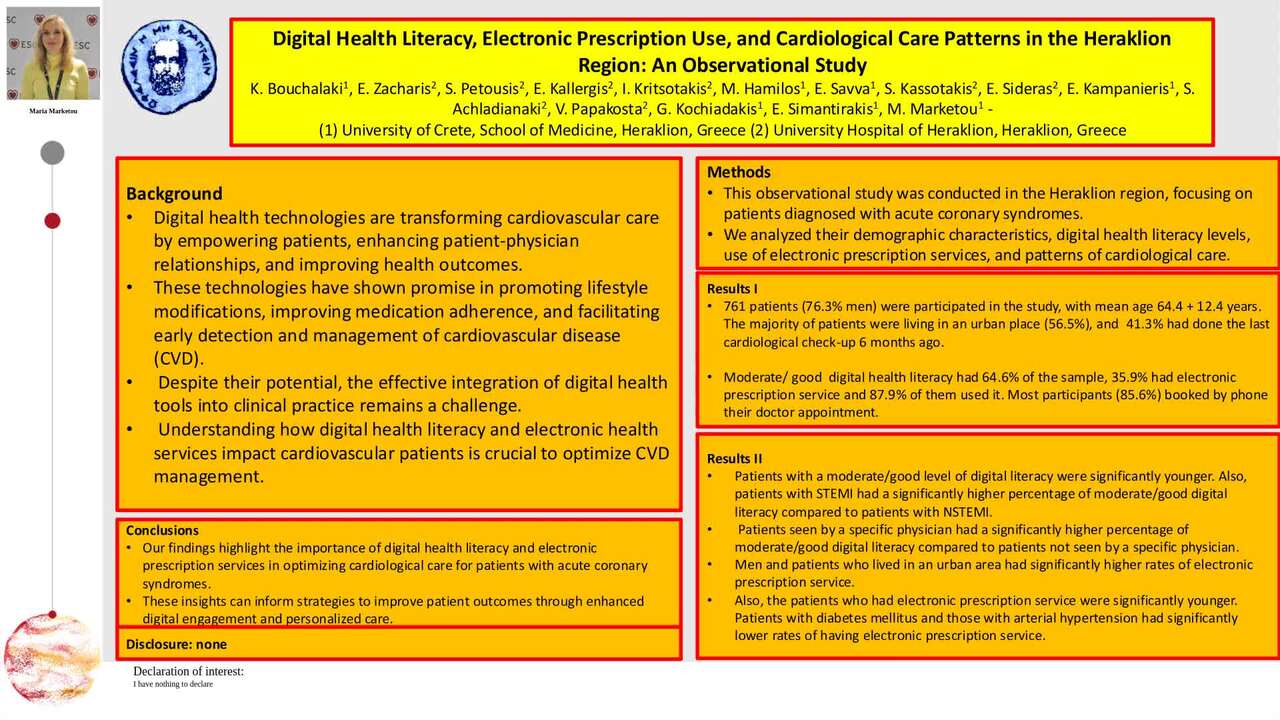
Nurse-led follow-up and digital health literacy in ACS: trends across pre-, during-, and post-COVID periods
European Journal of Cardiovascular Nursing


Abstract
The COVID-19 pandemic profoundly disrupted cardiovascular care pathways and accelerated the uptake of digital health solutions. Cardiovascular nurses play a central role in education, follow-up coordination, self-management support, and secondary prevention. Digital health literacy (DHL) has emerged as a key determinant of patients’ ability to access, understand, and use digital services, yet evidence on DHL evolution among acute coronary syndrome (ACS) patients in Southern Europe remains limited.
To examine changes in clinical characteristics, follow-up behaviors, and digital health literacy among ACS patients across pre-COVID, COVID, and post-COVID periods, highlighting the contribution and feasibility of nurse-led follow-up in real-world secondary prevention.
A retrospective observational study was conducted including 1,177 ACS patients admitted to two tertiary hospitals. Three periods were analyzed: pre-COVID (2019), COVID (2020–2022), and post-COVID (2023). Demographics, clinical parameters, and prevention-related behaviors were extracted from hospital records and complemented through structured nurse-led follow-up contacts. A cardiovascular nurse conducted repeated patient communications to verify and complete missing information on risk factors, follow-up attendance, laboratory testing, medication adherence, and digital health literacy indicators (e.g., use of e-prescription services, online health information seeking, and digital communication with healthcare providers). Group comparisons were performed using chi-square tests and ANOVA with Bonferroni correction.
ACS case distribution differed significantly across periods (p<0.001). During COVID, patients more frequently presented with diabetes, obesity, and smoking, indicating higher cardiovascular risk profiles. In the post-COVID period, STEMI presentations were more common. Significant differences were observed in key clinical parameters, including troponin levels, systolic blood pressure, and oxygen saturation (all p<0.05).
Follow-up behavior's improved markedly post-COVID, with higher follow-up rates (78%, p<0.001), more frequent cardiovascular evaluations, increased laboratory testing, and improved medication adherence. DHL differed significantly across periods and was highest in the post-COVID era (p<0.001).
Post-COVID improvements in secondary prevention behaviors and DHL highlight the value of nurse-led follow-up in strengthening digital engagement and continuity of care. Integrating DHL assessment and targeted nursing support may may improve outcomes and strengthen healthcare resilience. Demographic data & Blood test results Follow-up & Health literacy information
Contributors




You may be interested in