The function of cardiology outpatient stress testing and diagnostic performance for suspected stable cardiac chest pain
European Journal of Cardiovascular Nursing


Abstract
Outpatient stress testing is widely used to evaluate suspected stable cardiac chest pain prior to invasive angiography. UK NICE guidelines recommend CT coronary angiography (CTCA) as first-line, whereas ESC guidelines support functional imaging for intermediate-risk patients. Accurate diagnosis is essential to guide management and avoid unnecessary invasive procedures.
To determine the positive predictive value (PPV) of outpatient stress tests in identifying significant coronary artery disease (CAD) among patients referred for angiography following a positive test.
A retrospective audit was conducted at a District General Hospital reviewing 1,715 outpatient stress tests performed over nine months for patients with suspected stable cardiac chest pain. Patients with known CAD or undergoing valve surgery workup were excluded. Modalities included CTCA, Dobutamine Stress Echocardiography (DSE), Exercise Treadmill Test (ETT), and Myocardial Perfusion Scan (MPS). PPV was calculated based on angiographic evidence of ≥70% stenosis in a major epicardial vessel. Of 1,715 tests, 271 were positive; 93 patients proceeded to angiography.
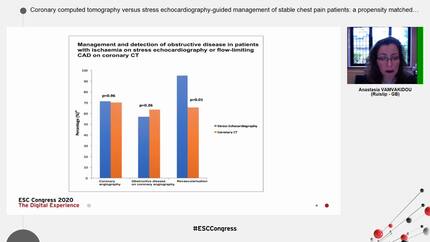
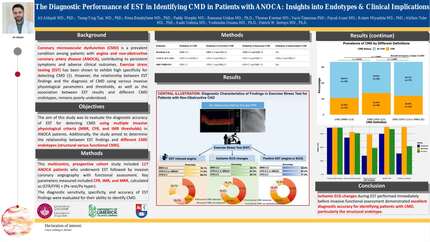
Among 93 angiograms, PPV varied significantly by modality: CTCA 22%, MPS 80%, DSE 58%, and ETT 70%. CTCA demonstrated the lowest PPV despite being guideline-recommended, likely reflecting detection of non-obstructive disease and artefacts. Functional imaging (MPS, DSE) and ETT correlated better with physiologically significant CAD requiring intervention.
This audit highlights substantial variability in diagnostic performance among stress testing modalities. CTCA, while sensitive for anatomical disease, showed poor predictive accuracy for obstructive CAD, potentially leading to unnecessary angiography and increased healthcare costs. Functional imaging and ETT demonstrated superior PPV, aligning with ESC recommendations for intermediate-risk patients. Factors influencing these findings include patient selection, CTCA limitations such as artefacts and calcification, and local practice patterns. Over-reliance on CTCA may compromise cost-effectiveness and patient experience.
Functional imaging and ETT outperform CTCA in predicting angiographically significant CAD among patients with positive outpatient stress tests. Incorporating ESC guidelines and pre-test probability scoring into diagnostic pathways may optimise resource utilisation and clinical outcomes. Future research should include prospective studies comparing anatomical and functional strategies, alongside cost-effectiveness analyses and patient-centred outcomes such as satisfaction and procedural burden.


You may be interested in