Minimal extra-cardiac atherosclerosis present in young people with sudden cardiac death due to coronary artery disease
European Journal of Preventive Cardiology


Abstract
This study aims to define the association between severe coronary artery disease and widespread atherosclerosis in younger individuals.
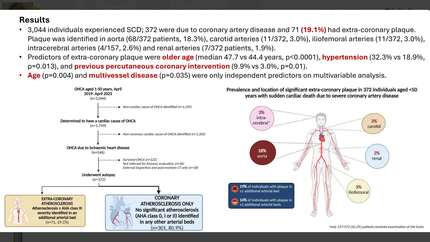
Individuals aged 1–50 years with sudden cardiac death (SCD) from 2019 to 2023, autopsy-proven to be due to coronary artery disease, were identified using the state-wide End Unexplained Cardiac Death (EndUCD) registry. Presence of extra-coronary atherosclerosis greater than modified American Heart Association Class III was assessed in four arterial beds (aorta, carotid, renal, and femoral arteries). A total of 3044 individuals experienced SCD; 356 were due to coronary artery disease, and 62 (17.4%) had extra-coronary plaque. Plaque was identified in the aorta (
Fewer than one in five people aged 1–50 years experiencing SCD from a coronary cause exhibited extra-coronary plaque, suggesting that in young people, severe atherosclerosis is not necessarily a concurrent systemic disease. This may limit the utility of screening for carotid or aortic plaque to predict coronary atherosclerosis on an individual level. Individuals with extra-coronary plaque were older with more established coronary disease.
Contributors



You may be interested in