A machine learning model for early risk stratification of 28-day mortality after myocardial infarction
European Heart Journal - Digital Health


Abstract
Despite significant improvement in transcatheter therapies, myocardial infarction (MI) retains a high burden of morbidity and mortality. While several scores have been developed, an established risk model tailored to predict short-term mortality after MI is lacking.
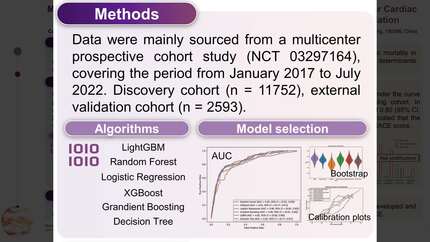
In this study, we leveraged real-world data to develop a machine learning (ML) model for predicting 28-day mortality after MI, relying on clinical data collected within the first 24 h of hospitalization. From the Augsburg Myocardial Infarction Registry, 14 725 MI patients surviving the first 24 h of the acute event were included: 80% in the training set for model development to train a Gradient Boosting Machine while the 20% remaining served as test set. A sequential feature selection process retained variables as long as their addition improved AUPRC within 5-fold cross-validation on the train set. We then assessed our model on the test set and performed an external validation on 1328 patients from the Brandenburg Myocardial Infarction Registry. Shapley additive explanations values were used to explain the ML model’s predictions. Our model retained six variables including age, systolic blood pressure, admission levels of glucose, creatinine, leucocytes, and whether the patient had a prehospital cardiac arrest. It exhibited good calibration and discrimination ability on the internal (AUROC=0.82) and external validation (AUROC=0.85) and outperformed common scores like GRACE, CADILLAC, and TIMI (
The results highlight the potential of our model to ease the detection of patients at high risk, allowing targeted early intervention to improve their outcome, and to contribute to improved precision medicine.
Contributors

Pierre G Aublin
Author
Stephanie G Kühne
Author
David Füller
Author
Benjamin Sasko
Author
Hannah Schulze
Author
Oliver Ritter
Author
Ferdinand Bauke
Author
Christine Meisinger
Author
Jakob Linseisen
Author
Philip Raake
Author
Sebastian Zaunseder
Author
Timo Schmitz
Author

You may be interested in