Multi-system thromboembolism: a case report of concurrent pulmonary, myocardial, and abdominal embolism
European Heart Journal - Case Reports


Abstract
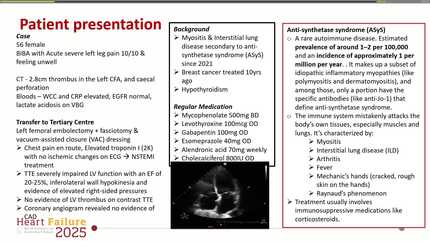
Multisystem thromboembolism is a rare but potentially fatal phenomenon that can develop in patients with underlying hypercoagulability and rapidly progress to multiorgan failure if not promptly identified. Concurrent arterial and venous embolic events should raise suspicion for paradoxical embolism, particularly in patients with a patent foramen ovale (PFO).
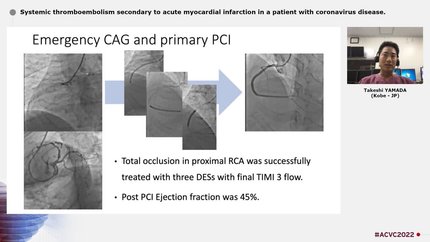
A 63-year-old male with a history of malignancy, renal transplant on tacrolimus, and limited mobility presented with dyspnoea and abdominal discomfort. During initial evaluation, he developed acute chest pain, with ECG demonstrating acute posterior myocardial infarction (MI) requiring emergent percutaneous coronary intervention. A CT angiogram subsequently revealed bilateral pulmonary emboli (PE) with right heart strain. After percutaneous management of both PE and MI, he developed worsening lactic acidosis and multiorgan failure. A repeat abdominal CT demonstrated acute mesenteric ischaemia with extensive pneumatosis intestinalis. Transthoracic echocardiography with bubble study revealed a PFO with right-to-left shunt, suggesting paradoxical embolism as the aetiology of simultaneous PE, MI, and mesenteric ischaemia.
This case illustrates a presentation of possible PFO-mediated multisystem thrombosis across coronary, pulmonary, and mesenteric circulations. Persistent or unexplained lactic acidosis following treatment of known thrombotic events should prompt urgent abdominal imaging, particularly in intubated or non-communicative patients who cannot report pain out of proportion from physical examination. Early recognition of paradoxical embolism is essential in preventing delays in diagnosing occult mesenteric ischaemia, a complication with high mortality when detected late.
Contributors

Mariah Mascara
Author
Lovish Gupta
Author
Ramzi Khalil
Author
Saad Tabbara
Author
Tom Wardill
Author
Raheel Ahmed
Author
Marianna Garcia-Saldivia
Author
John Kanakakis
Author
Deepti Ranganathan
Author
You may be interested in