Cuffless Blood Pressure Monitoring Devices: Technical Foundations and Clinical Implications Scientific Statement of the European Society of Cardiology (ESC) Working Group on e-Cardiology, the ESC Council on Hypertension, and the European Association of Preventive Cardiology of the ESC
European Journal of Preventive Cardiology


Abstract
Cuffless blood pressure (BP) monitoring devices represent a promising innovation in hypertension management. This scientific statement provides a comprehensive update on these emerging technologies, their specific validation requirements, their potential clinical applications, and their present and future challenges.
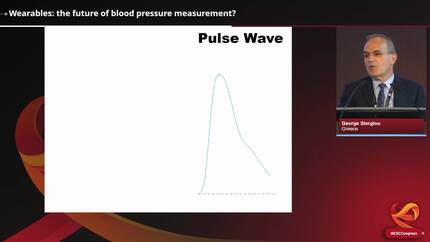
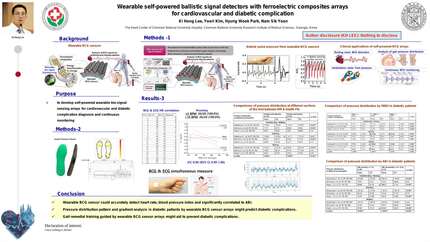
These devices generate considerable interest by enabling non-invasive BP measurement without arterial occlusion, thereby eliminating the discomfort associated with traditional cuff-based monitoring, particularly during sleep. The technologies on which these devices are based comprise a heterogeneous group, primarily utilizing pulse wave propagation time or waveform analysis through contact or non-contact sensors. They can be categorized as continuous or intermittent, automated or manual, calibration-free or requiring cuff/demographic calibration, and wearable or stationary. This technological diversity necessitates validation protocols distinct from those used for conventional cuff-based monitors, with specific requirements for each device category.
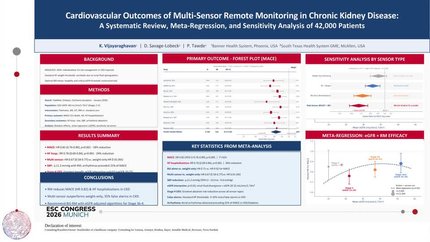
Potential clinical applications include widespread out-of-office BP monitoring, unbiased assessment of circadian BP patterns and BP variability, improved detection of nocturnal hypertension, enhanced treatment adherence and long-term BP control, and continuous monitoring in hospital settings. Additionally, their lower cost compared with conventional technologies could enhance the early detection of hypertension in resource-limited settings. However, due to insufficient accuracy validation, this scientific statement does not recommend their use in clinical decisions in spite of their potential interest, in line with international guidelines not recommending their use in hypertension management. Key challenges ahead include developing standardized validation protocols, establishing normative BP data, managing the resulting burden on clinicians in handling huge volumes of data, exploring additional haemodynamic parameters, and advancing sensor technology, mathematical models, and algorithms.
Contributors


Juan Eugenio Ochoa
Author
Ana Abreu
Author

Rosa Maria Bruno
Author
Enrico G Caiani
Author
Ruben Casado-Arroyo
Author
Matthijs Cluitmans
Author
Constantinos H Davos
Author

Polychronis Dilaveris
Author
Federico Guerra
Author

Magnus T Jensen
Author
Thomas Kahan
Author
Harold Kemps
Author
Paul Leeson
Author
Emanuela T Locati
Author
Joost Lumens
Author
Felix Mahfoud
Author
José Millet Roig
Author

Theodoros G Papaioannou
Author
Pyotr G Platonov
Author
Julia Ramirez
Author
Mark J Schuuring
Author

Roderick Willem Treskes
Author
Alberto Avolio
Author
Paolo Castiglioni
Author
You may be interested in