Comparative analysis of monthly weight-regain dynamics after discontinuation of semaglutide vs tirzepatide
Cardiovascular Research


Abstract
GLP-1 and dual GIP/GLP-1 receptor agonists are now central assets in the pharmacologic management of obesity. While tirzepatide consistently achieves superior weight-loss outcomes compared with semaglutide, understanding the post-discontinuation regain curve is essential for long-term clinical strategy and patient counseling.
To compare the month-by-month dynamics of weight regain following therapeutic interruption of semaglutide and tirzepatide, providing a quantitative model suitable for clinical decision-making and risk communication.
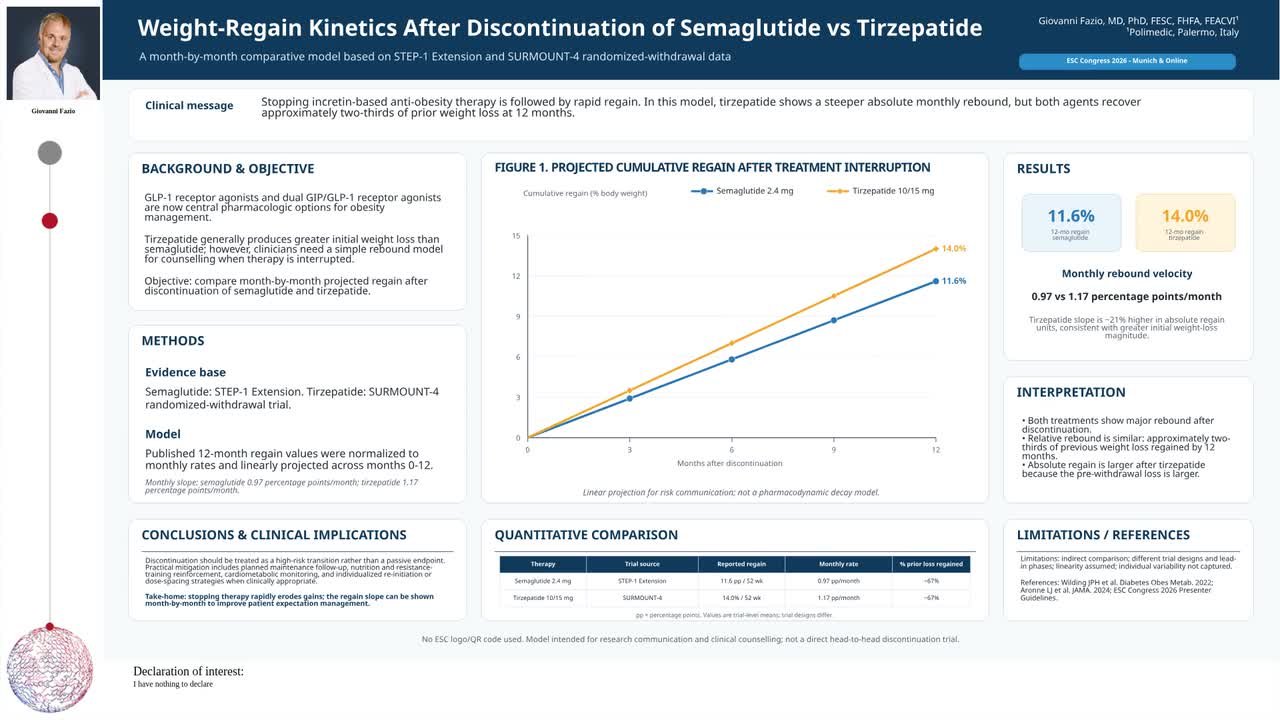
Evidence was extracted from the STEP-1 Extension trial (semaglutide) and the SURMOUNT-4 randomized-withdrawal trial (tirzepatide). Reported one-year post-discontinuation regain values—11.6% for semaglutide and 14.0% for tirzepatide—were normalized to monthly rates (0.97% and 1.17%, respectively). A linear projection curve was generated to visualize cumulative regain over 12 months.
Both agents demonstrated substantial weight regain after cessation, with approximately two-thirds of prior weight loss recovered within one year. The monthly rebound slope was steeper for tirzepatide, aligned with its greater initial weight-loss magnitude. In absolute terms, tirzepatide resulted in a higher cumulative regain, although relative rebound patterns were comparable across the two therapies.
Weight-regain kinetics after discontinuation show similar proportional rebound between semaglutide and tirzepatide, but tirzepatide exhibits a higher monthly regain velocity. These findings highlight the need for structured maintenance strategies, tapered off-ramp protocols, and continuous lifestyle support when discontinuing therapy. The monthly linear model offers a pragmatic communication tool for managing patient expectations and long-term therapeutic planning.
Contributors

You may be interested in