Prediction of vasovagal syncope using artificial intelligence-enabled smartwatch photoplethysmography-derived heart rate variability
European Heart Journal - Digital Health


Abstract
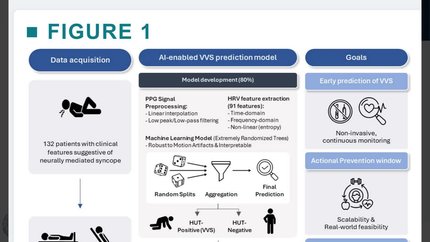
Vasovagal syncope (VVS) can cause injury and impaired quality of life, and effective prevention requires timely warning before loss of consciousness. To evaluate whether smartwatch photoplethysmography (PPG)-derived heart rate variability (HRV) can predict VVS before symptom onset, and to identify an optimal observation window and lead time.
We prospectively enrolled 132 patients with suspected neurally mediated syncope who underwent head-up tilt (HUT) testing while wearing a wrist-worn Samsung Galaxy Watch 6 for continuous multiwavelength PPG acquisition (25 Hz). The HRV features (
Artificial intelligence-enabled analysis of smartwatch PPG–derived HRV can prospectively predict VVS during HUT using a short 5-min observation window while maintaining clinically meaningful performance at a 5-min lead time, supporting the feasibility of wearable, real-time warning systems.
Contributors

Hak Seung Lee
Author
Junho Song
Author
Moonki Jung
Author
Yong-Yeon Jo
Author
Joon-myoung Kwon
Author
You may be interested in