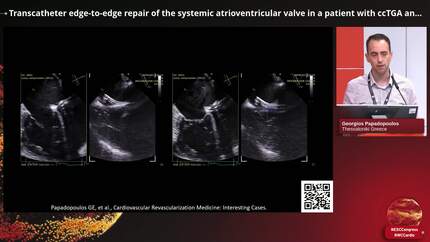
Systemic atrioventricular valve transcatheter edge-to-edge repair in ccTGA and surgically corrected TGA with complex anatomies: a case series
European Heart Journal Supplements


Abstract
In congenitally corrected (ccTGA) and surgically corrected transposition of the great arteries (TGA), systemic atrioventricular valve (SAVV) regurgitation accelerates systemic right-ventricular (sRV) failure and adverse outcomes. When surgical risk is prohibitive, transcatheter edge-to-edge repair (TEER) may offer a minimally invasive alternative, but data in anatomically complex adult congenital heart disease remain limited.
To assess the feasibility, safety, and technical strategies of transcatheter edge-to-edge repair (TEER) for systemic atrioventricular valve regurgitation in adults with ccTGA or surgically corrected TGA and prohibitive surgical risk.
We report a case series of four adults with ccTGA and surgically corrected TGA and severe SAVV (morphologically tricuspid) regurgitation, all symptomatic in New York Heart Association (NYHA) class IV. Venous access and transseptal strategy were individualized to anatomic substrate. Device platforms included the PASCAL ACE system in three cases and TriClip system in one case where anatomy and access mandated an alternative. Primary endpoints were acute procedural success and in-hospital complications; secondary endpoints were residual regurgitation and early functional status.
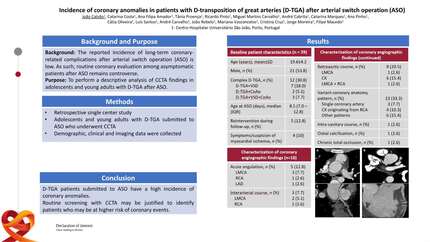
Anatomic contexts comprised: (i) dextrocardia with situs solitus; (ii) Mustard atrial switch; (iii) Mustard atrial switch with severe iliofemoral tortuosity necessitating right internal jugular access; and (iv) interrupted inferior vena cava (azygos continuation) requiring right internal jugular access. Transfemoral transseptal access was feasible in two patients; right internal jugular access was employed in two. Targeted technical adaptations included mirror-image catheter torque management and extreme "S-shaped" system configuration in dextrocardia; baffle puncture in one Mustard patient using the back end of a 0.014″ coronary wire; and traversal/support in the other Mustard patient using the back end of a 0.032″ wire from the transseptal system with aggressive balloon predilatation. TEER implantation succeeded in all four patients (100%), reducing SAVV regurgitation from severe to mild without significant diastolic gradient and with no intraprocedural or in-hospital complications. At follow-up, case (i) with dextrocardia maintained mild regurgitation and improved to NYHA I at 1 year; cases (ii) and (iii) (Mustard) improved to NYHA II at 6 months with sustained mild regurgitation; and case (iv) (interrupted IVC/azygos) remained NYHA II with stable mild regurgitation at 7 years—the longest reported follow-up of SAVV TEER in adult congenital heart disease.
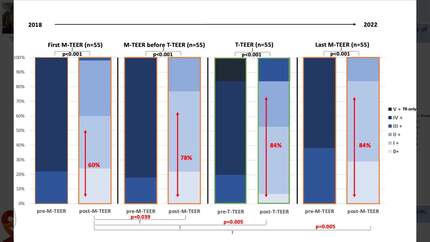
TEER of the SAVV in ccTGA and surgically corrected TGA is feasible and safe across a spectrum of challenging anatomies. Figure
Contributors


You may be interested in