Preliminary findings from the GEDI-ACS registry: integrating sex-specific, psychosocial, and biological determinants in women with acute coronary syndromes
European Heart Journal Supplements


Abstract
Women with acute coronary syndromes (ACS) remain underrepresented in clinical trials, despite CVD being the leading cause of their mortality 1. The Gender, Diversity and Inclusion–Acute Coronary Syndromes (GEDI-ACS) registry is the first Italian multicenter, multidisciplinary prospective registry dedicated to women with ACS, integrating clinical, sex-specific, socioeconomic, psychosocial, and multi-omics data.
To describe preliminary findings from the first 68 women enrolled in GEDI-ACS.
Women ≥18 years admitted with STEMI, NSTEMI, or unstable angina were consecutively enrolled. Assessments included clinical, instrumental, and biomarker evaluation. Traditional, Sex-specific risk factors and psychosocial determinants (health literacy, quality of life, therapy adherence) were assessed using validated tools. Socioeconomic indicators and biospecimens (DNA, RNA, plasma, PBMCs) were collected.
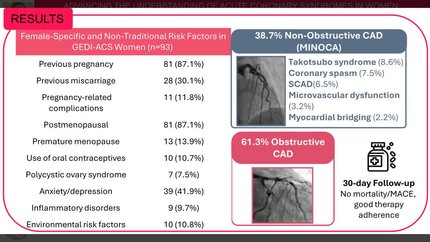
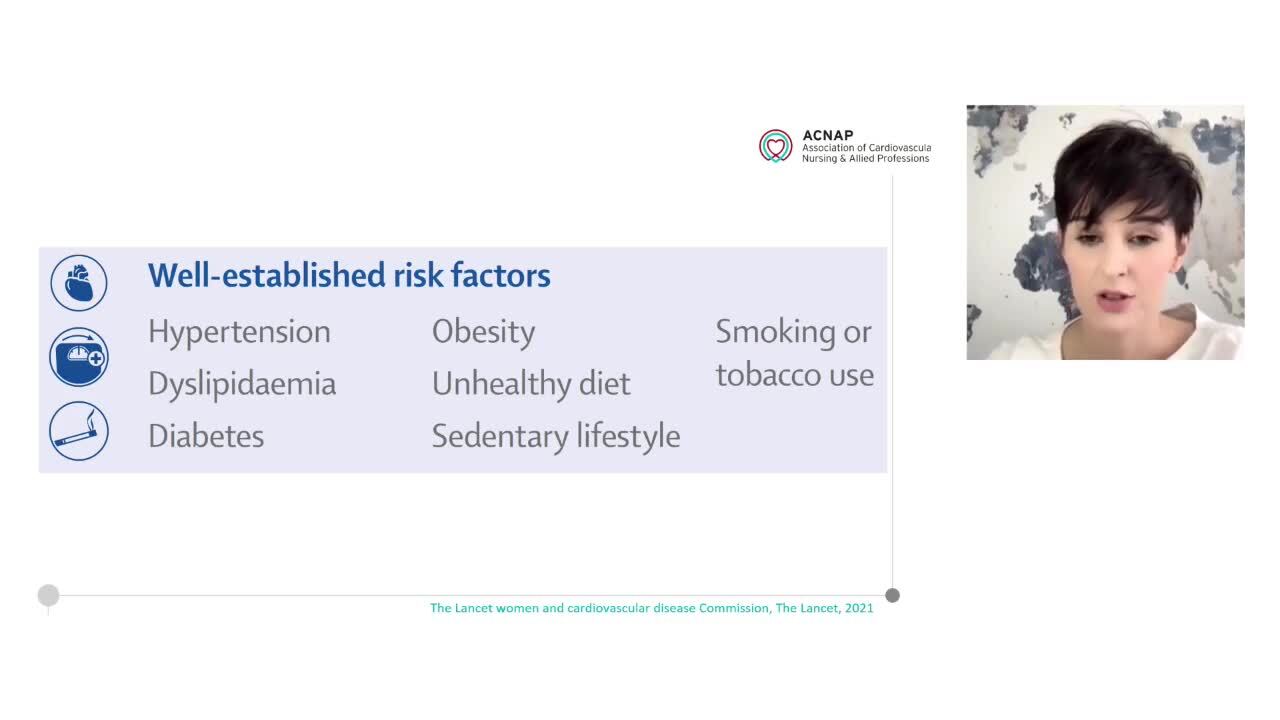
Median age was 68 years [IQR 57–77]; 7.4 % were non-Caucasian. Traditional risk factors were frequently observed while premature menopause occurred in 16.2%. Most were postmenopausal (92.6%), and 32.3% reported miscarriage. Autoimmune disease were present in 32.2% while 16.2% had an history of cancer. Anxiety/depressionaffected 42.6%, and, majority ( 85.3%) had low health literacy. Chest pain (88.2%) was the main symptom. ACS was the first manifestation of CVD in 59 patients (86%). Majority presented with STEMI (38.2%), NSTEMI (36.8%), and unstable angina (25%). Of note a diagnosis of MINOCA occurred in 38.2%, mainly Takotsubo (13.2%) or spontaneous coronary artery dissection (7.4%). Treatments followed ESC guidelines. All patients underwent coronary angiography and 53% PTCA. Dual antiplatelet therapy was prescribed in 70.6%. At 30 days (n=44), no deaths, strokes, or reinfarctions occurred; recurrent chest pain appeared in 11.3%.
GEDI-ACS highlights the multidimensional nature of ACS in women, combining clinical, biological, and psychosocial perspectives. For many ACS was the first cardiovascular event, often coexisting with non-cardiac comorbidities. Premature menopause and adverse pregnancy history, indicate the need for tailored preventive approaches, nevertheless, psychosocial and economic barriers—low income, anxiety, poor health literacy—may hinder recovery and adherence. Of note, MINOCA was a frequent finding underlying the need to endotype definition through advanced cardiovascular imaging. Despite this complexity, short-term outcomes were favorable. The ongoing GEDI-ACS registry, with omics integration, will expand understanding of women’s cardiovascular risk and guide precision prevention.
Contributors



You may be interested in