Foetal 4D flow cardiac magnetic resonance for advanced diagnostics of congenital heart disease: a prospective cohort study
European Heart Journal - Cardiovascular Imaging


Abstract
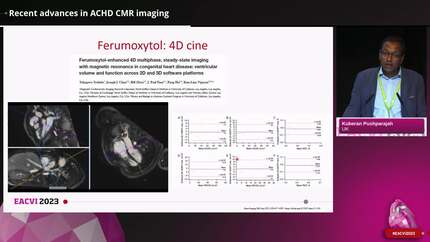
Foetal circulation undergoes complex changes in congenital heart disease (CHD) that are challenging to assess with foetal echocardiography. This study aimed to assess clinical feasibility and diagnostic value of 4D flow cardiovascular magnetic resonance (CMR) in foetal CHD.
Pregnant women in advanced third trimester pregnancy with foetal CHD were prospectively recruited for foetal CMR between August 2021 and November 2024. CMR protocol included cine and 4D time-resolved PC acquisitions. 4D flow data were evaluated for additional diagnostic information beyond cine imaging. Postnatal examination reports were used to confirm CMR findings. Net flow was quantified in the ascending aorta, distal aortic arch, main pulmonary artery, ductus arteriosus, and descending aorta and normalized to combined ventricular output (CVO). Student’s
Foetal 4D flow CMR characterizes flow patterns and provides relevant diagnostic information beyond cine imaging for prenatal CHD assessment.
Contributors

Thomas M Vollbrecht
Author
Christopher Hart
Author
Christoph Katemann
Author

Claus C Pieper
Author
Daniel Kuetting
Author
Annegret Geipel
Author
Brigitte Strizek
Author

You may be interested in