Randomized trial of low-dose, ultrasound-assisted thrombolysis or heparin for pulmonary embolism
Cardiovascular Research


Abstract
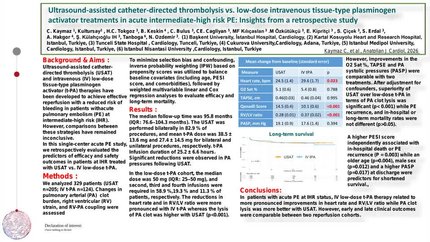
Intermediate high-risk pulmonary embolism (PE) is associated with increased risk of haemodynamic deterioration and death, but balancing the risk of thrombolytics or catheter-based treatment and efficacy has been challenging. This trial compared the additional efficacy of catheter-based ultrasound low-dose thrombolysis (USAT) over intravenous low-dose thrombolysis or heparin alone.
In an investigator-initiated randomized clinical multicentre trial, we randomized 210 adult patients with acute, intermediate high-risk PE admitted to emergency departments in two regions of Denmark. Patients were allocated 1:1:1 to one of three treatment strata: low-dose thrombolysis (20 mg alteplase administered over 6 h) by USAT, by intravenous administration, or heparin alone. The efficacy of the interventions was assessed by comparing the refined Modified Miller Score, rmMS, (0–40 points, higher score indicating higher thrombus burden) from CT angiographies performed at baseline and 48–96 h post-randomization. Two comparisons were investigated: the reduction of rmMS with low-dose thrombolysis (USAT or intravenously) compared to heparin alone and the reduction of rmMS with low-dose thrombolysis administered by USAT compared to the intravenous route. The safety endpoint included the risk of bleeding.
We included 210 patients with acute PE, 49% were female, the mean age was 70 (IQR 62–76), and the mean body mass index was 30 (26–34). Compared to heparin alone, low-dose thrombolysis reduced the rmMS by 3.6 points (95% CI 2.2–5.0,
Low-dose thrombolysis reduced thrombus burden more than heparin alone in patients with acute intermediate high-risk PE. However, USAT did not show greater thrombus reduction than intravenous thrombolysis. The rate of death and risk of bleeding complications were increased with low-dose thrombolysis.
Contributors


Lia E Bang
Author
Emilie Sonne-Holm
Author

Lene Holmvang
Author
Jens Flensted Lassen
Author
Den Eik Høfsten
Author
Peter Sommer Ulriksen
Author
Samir Jawad
Author

Conni Søe
Author
Mads K Ersbøll
Author
Søren Boesgaard
Author
Jacob E Møller
Author
Jens Jakob Thune
Author

Hans-Henrik Tilsted
Author
Jacob Lønborg
Author
Michael Egstrup
Author
Ole P Kristiansen
Author
Ekin Seven
Author
Matias G Lindholm
Author
Kristian Eskesen
Author
Søren Fanø
Author
Jørn Carlsen
Author
You may be interested in