A pipeline for developing deep learning prognostic prediction models in cardiac magnetic resonance image analysis
European Heart Journal - Digital Health


Abstract
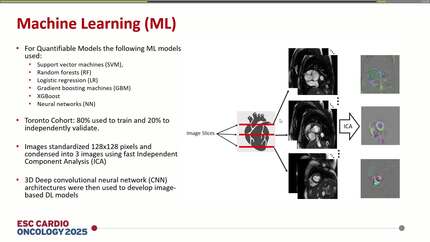
Patients and healthcare professionals require clinical prediction models to accurately guide healthcare decisions, although an awareness of the limitations of regression-based models has recently increased. Deep learning (DL) has emerged as a promising alternative to traditional regression-based models, due to its ability to effectively analyse heterogeneous types of data, ranging from numerical variables to medical images.
Building a DL model presents various challenges, including conceptualizing the clinical problem, selecting appropriate variables and model architecture, and providing explainability. We propose a four-step pipeline for developing DL-based prediction models for cardiac magnetic resonance image analysis. This framework aims to support researchers in exploring DL application across the broad spectrum of cardiology, with a specific focus on advancement in arrhythmic risk prediction.
The field of cardiomyopathy faces challenges when assessing arrhythmic risk due to the low accuracy of the current prediction models. Research efforts have focused on developing DL models able to predict major arrhythmic events in dilated cardiomyopathy. While the initial results are promising, further tests are needed before translating these models into clinical practice.
Contributors

Mattia Corianò
Author
Imperial College London London , United Kingdom of Great Britain & Northern Ireland

Corrado Lanera
Author

Pier Giorgio Masci
Author
King's College London London , United Kingdom of Great Britain & Northern Ireland

Martina Perazzolo Marra
Author
Dario Gregori
Author
You may be interested in