Sudden cardiac arrest in a 47-year-old female with hypertrophic obstructive cardiomyopathy and anomalous papillary muscle insertion: a case report with advanced multimodal imaging, pathophysiological insights, and evidence-based surgical management
European Heart Journal - Case Reports


Abstract
Hypertrophic obstructive cardiomyopathy (HOCM) with anomalous papillary muscle insertion (APMI) is a rare morphological variant that can cause fixed subvalvular obstruction and malignant arrhythmias. Diagnostic assessment becomes especially challenging when significant gradients occur without systolic anterior motion (SAM), making multimodal imaging crucial.
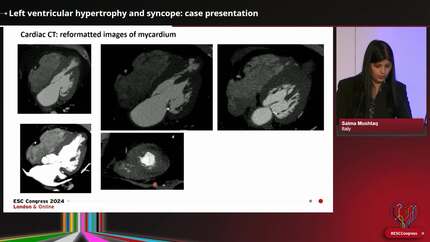
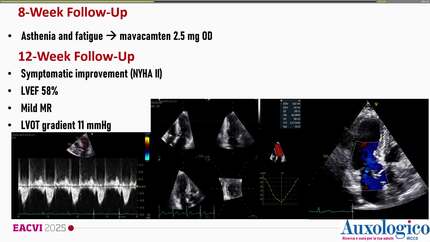
A 47-year-old woman experienced out-of-hospital cardiac arrest due to ventricular fibrillation during physical exertion. Transthoracic and transesophageal echocardiography revealed a hypertrophied anterolateral papillary muscle inserting directly into the anterior mitral leaflet at the aortomitral junction, forming a rigid subvalvular ridge without SAM. Cardiac magnetic resonance showed concentric hypertrophy and preserved function without fibrosis. Extended septal myectomy and resection of the anomalous papillary muscle resulted in complete resolution of obstruction. Postoperative recovery was uneventful, and the patient remains under structured follow-up.
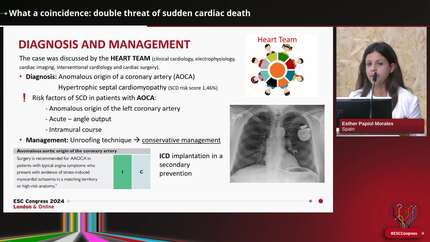
This case illustrates how multimodality imaging is crucial for recognizing uncommon subvalvular variants of hypertrophic obstructive cardiomyopathy and for guiding optimal therapeutic decision-making. Surgical success in such patients relies on complete resection of obstructive structures. While ICD implantation was considered according to secondary prevention guidelines, the decision was deferred after successful surgical correction and interim protection with a wearable defibrillator. Conventional HCM risk models may not fully capture the risk profile of these rare phenotypes, underscoring the importance of individualized management.
Contributors



Matthias Bechtel
Author
Justus Strauch
Author
Aydan Ewers
Author
Alessandro Palmieri
Author
Deepti Ranganathan
Author
You may be interested in