Beta-blockers after myocardial infarction: effects according to sex in the REBOOT trial
European Heart Journal


Abstract
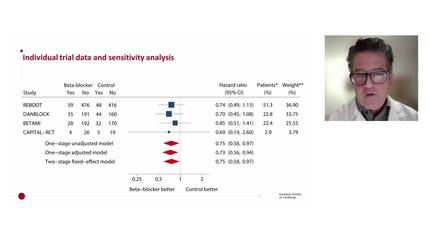
Recent trials have challenged the guideline recommendation of beta-blockers for post-myocardial infarction (MI) patients without reduced left ventricular ejection fraction (LVEF). Whether these recent findings apply equally to women and men remains unknown.
Using data from REBOOT (tREatment with Beta-blockers after myOcardial infarction withOut reduced ejection fracTion), the largest randomized trial evaluating the effect of beta-blockers after acute MI with LVEF > 40%, a pre-specified sex-specific subgroup analysis was performed. A total of 8438 out of the 8505 randomized patients comprised the intention-to-treat population.
Among 8438 patients, 1627 were women, who were older, had more comorbidities, and received fewer guideline-based therapies than men. Over a median follow-up of 3.7 years, women had overall higher rates of the primary composite outcome (death, MI, or heart failure hospitalization) than men. The incidence rate of the primary endpoint in women was 30.4 and 21.0/1000 patient-years in the beta-blocker group and no beta-blocker group, respectively (hazard ratio 1.45, 95% confidence interval 1.04–2.03). No significant differences were observed in men (hazard ratio .94, 95% confidence interval .79–1.13;
In the REBOOT trial of MI patients managed according to contemporary standards, beta-blocker therapy was associated with evidence of harm in women—particularly those with preserved LVEF and receiving higher doses—an effect not observed in men.
Contributors

Xavier Rossello
Author
Alberto Dominguez-Rodriguez
Author
Roberto Latini
Author
Pedro L Sánchez
Author
Sergio Raposeiras-Roubín
Author
Manuel Anguita
Author

Giulietta Grigis
Author
Ruth Owen
Author
Stuart Pocock
Author
Sandra Gómez-Talavera
Author

Noemí Escalera
Author
Carlos Nicolás Pérez-García
Author

María López Benito
Author
Giulia Pongetti
Author
Luis M Rincón-Díaz
Author
Irene Buera
Author
José Rozado
Author
María Jesús García
Author
Oscar Prada-Delgado
Author
Deborah Cosmi
Author
Valentín Fuster
Author

Borja Ibanez
Author
National Centre for Cardiovascular Research CNIC AND Fundacion Jimenez Diaz Hospital Madrid , Spain
You may be interested in