Characteristics, use of guideline–recommended medical therapies and clinical outcomes of patients with heart failure not enrolled in a quality registry: a comparison with the Swedish Heart Failure Registry
European Heart Journal - Quality of Care and Clinical Outcomes


Abstract
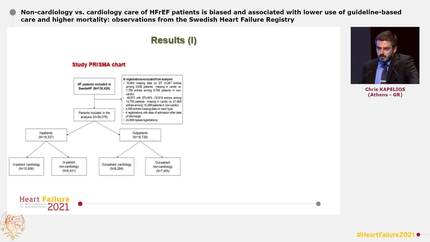
Quality registries may involve specific inclusion criteria, detailed investigations, or selected hospitals and practitioners, which are not random. Whether the care and outcomes in quality registries are generalizable to the broader population is not well known. We here examine care indicators and outcomes in heart failure (HF) patients enrolled vs. non-enrolled in Swedish Heart Failure (SwedeHF) quality registry.
Observational study of 90-day survivors after a HF in Stockholm (2012–2021). We linked health records from the Stockholm Creatinine Measurements project with SwedeHF. Participants enrolled in SwedeHF were compared to those non-enrolled, focusing on settings of care, use of guideline-recommended therapies, treatment adherence, dose titration, persistence, and outcomes. Analyses considered stratification by settings of management (primary care, cardiology-outpatient, and cardiology-inpatient care). We identified 48 374 incident HF cases of which 4878 (10%) were enrolled in SwedeHF within 90 days. Enrolled participants were younger, more often men and had fewer comorbidities than non-enrolled. Enrolled participants were more likely to initiate, persist and adhere to, and achieve higher dosages of guideline-recommended HF therapies (
Enrollment in the SwedeHF registry occurred in a minority of patients, and was associated with better adherence to guideline-recommended HF therapies and fewer major cardiovascular events and lower mortality. The generalizability of these HF registry findings to all HF patients was, however, limited.
Contributors

Ailema González-Ortiz
Author
Paul Hjemdahl
Author
Faizan Mazhar
Author
Alessandro Bosi
Author
Anne-Laure Faucon
Author


Juan Jesus Carrero
Author
You may be interested in