Transvenous lead extraction of abandoned vs functional leads: a systematic review and meta-analysis of procedural and long-term clinical outcomes
European Heart Journal


Abstract
Transvenous lead extraction (TLE) is a crucial intervention in managing implantable cardiac device complications. Lead removal is well-established for infection; however, guidelines do not express a preference for extraction vs abandonment of non-infected, superfluous leads. While lead abandonment (LA) avoids upfront risk, it might pose long-term issues, particularly if future extractions are indicated. This analysis evaluates the complication rates and clinical outcomes of TLE of AL compared to functional leads (FL).
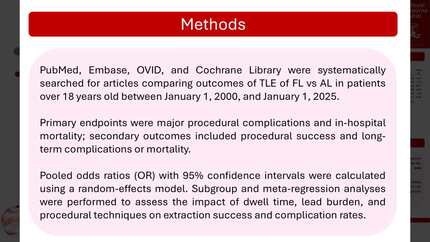
PubMed, MEDLINE Ovid and EMBASE were searched. Studies were included if they compared outcomes of TLE of AL vs FL. Subgroup and meta-regression analyses were performed to assess the impact of dwell time, lead burden, and procedural techniques on extraction success and complication rates. Pooled outcomes were analysed using a random-effects model, with effect sizes reported as odds ratios (OR) with 95% confidence intervals (CI).
Seven observational studies with a total of 13,105 patients were included in our final analysis. TLE of AL was associated with higher in-hospital mortality and major complications compared to FL (OR 2.51; p = 0.0037) as well as increased risk of clinical failure (OR 4.16; p < 0.05). Longer lead dwell times correlated with higher complication rates and greater procedural difficulty.
Abandoned leads significantly increase the complexity of TLE with higher in-hospital mortality, major complication and procedural failure rates. The initial decision to abandon or extract superfluous leads should therefore be individualised and based on patient risk profiles, balancing procedural risk of TLE against long-term complications of lead abandonment.
Contributors

You may be interested in