Analysis of peri-syncopal symptoms in pediatric patients with vasovagal syncope compared to adult
European Heart Journal


Abstract
Vasovagal syncope (VVS) is the most common cause of transient loss of consciousness and is often associated with characteristic pre-syncope, syncopal, and post-syncope symptoms. Awareness of these peri-syncopal symptoms is paramount for properly diagnosing VVS and differentiating it from other causes of syncope, which significantly influence patient management. Age-dependent autonomic regulation and physiological responses are well documented and therefore a comparative analysis of such symptoms is key to establishing age-appropriate knowledge for adequate management.
This study aimed to compare symptoms before (prodrome), during, and after vasovagal syncope between adults and the pediatric population.
This retrospective study analyzed data from the Syncope Unit of a Tertiary Center between 2017 and 2024. Patients diagnosed with vasovagal syncope (VVS) based on clinical history, physical examinations, and adherence to current syncope guidelines were included. Participants were divided into two groups: adults (age ≥18 years) and pediatrics (age <18 years). Data, including prodromal, during-syncope, and post-syncope symptoms, were systematically collected and compared between the two groups. Continuous variables were analyzed using the Wilcoxon rank-sum test, while categorical variables were assessed using Pearson’s chi-squared test.
Of the 3093 patients, 2789 (90.2%) were adults and 304 (9.8%) were children. The median age in the adult population was 46 (32–62), and 15 (14–16) in the pediatric population. The proportion of females was significantly higher in pediatrics compared to adults (57% vs. 49%, P=0.008). The rate of syncope without prodrome was significantly higher in adults than in pediatrics. (18% vs. 6.9%, P<0.001) The most common prodromal symptom in both populations was lightheadedness, which was significantly higher in pediatrics (70% vs. 54%, P<0.001). Diaphoresis and chest pain were more frequent in adults (28% vs. 19%, P=0.001, and 15% vs. 11%, P=0.04, respectively), while abdominal pain was more common in pediatrics (12% vs. 8.3%, P=0.06). Regarding symptoms during syncope, there was no difference in tongue biting or trauma between the two groups. However, pediatrics had more abnormal gaze and movements compared to adults (12% vs. 8.0%, P=0.035, and 15% vs. 9.6%, P=0.005, respectively), while adults experienced more urinary incontinence than pediatrics (6.4% vs. 2.6%, P=0.009). After syncope, drowsiness, chest pain, palpitations, headache, and amnesia were the most commonly reported symptoms, with drowsiness being significantly higher in pediatrics compared to adults (35% vs. 29%, P=0.02).
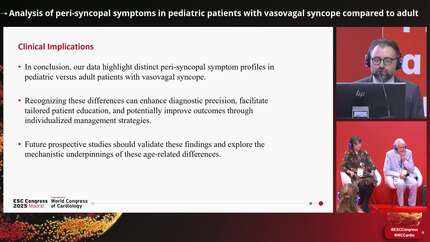
Our findings highlight the need for future consideration of age-specific symptom recognition on the assessment and diagnosis of vasovagal syncope, which may support better clinical decision-making and optimize management practices.
Contributors



You may be interested in