Sex differences in prognostic significance of right ventricular-pulmonary artery coupling prior to transcatheter aortic valve replacement
European Heart Journal


Abstract
Aortic stenosis (AS) is the most prevalent valve disorder in developing countries, with transcatheter aortic valve replacement (TAVR) being a common treatment option for patients with severe AS. Research indicates that right ventricular (RV) function plays a critical role in predicting adverse outcomes.
This study aims to assess sex differences in prognostic significance of right ventricular (RV) function, evaluated through RV-pulmonary artery (PA) coupling, in predicting all-cause mortality in patients with severe aortic stenosis (AS) following transcatheter aortic valve replacement (TAVR).
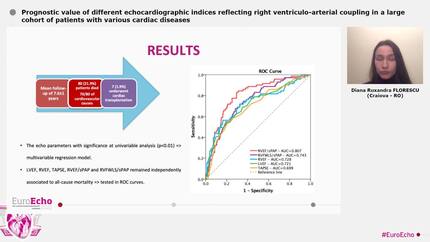
We conducted a retrospective cohort study involving patients with severe AS who underwent TAVR at a referral center between 2016 and 2022. Pre-procedural RV function was assessed using conventional parameters and RV-free wall longitudinal strain. RV-PA coupling was evaluated using the tricuspid annular plane systolic excursion/pulmonary artery systolic pressure (TAPSE/PASP) <0.36 mm/mmHg ratio and the RV-free wall longitudinal strain/PASP <0.74%/mmHg ratio (RVFWLS/PASP). The primary outcome was all-cause mortality up to 2 years.
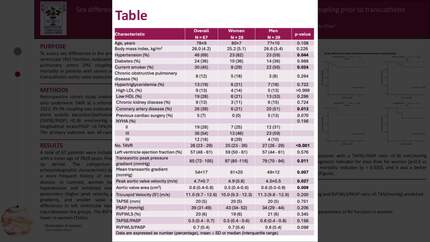
A total of 67 patients who underwent TAVR were included 42% women and 58% men. Five patients died in the follow-up period. Median left ventricular ejection fraction was 57 (48-61 %). Demographic and echocardiographic characteristics are shown in the Table 1. Kaplan Meier survival curves demonstrated lower survival rated in patients withTAPSE/PASP <0.36 mm/mmHg (p=0.023), when stratifying by sex it demonstrated to be a better indicator for men than for women (p=0.6 vs p=0.003). Also, RVFWLS/PASP <0.74%/mmHg ratios is a mortality indicator (p=0.020) and it is a better indicator for males than for females mortality (p=0.068 vs p=0.2) (Figure 1).
Pre-procedural RV-PA coupling, as assessed by the TAPSE/PASP ratio (<0.36 mm/mmHg) and RVFWLS/PASP ratio (<0.74%/mmHg), predicted increased risk of all-cause mortality at 2 years post-procedure. However, ventricular-arterial coupling is a better prognostic marker in men before TAVI. This study makes evident the need to look for other unconventional parameters of right ventricular function in women.
Contributors


You may be interested in