Illicit stimulants and ventricular arrhythmias: a longitudinal cohort study
European Heart Journal


Abstract
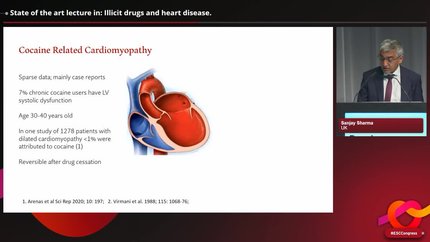
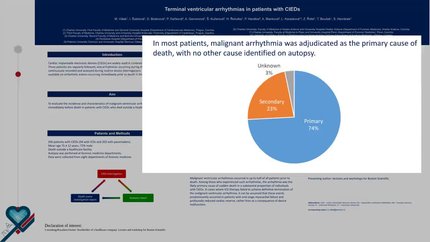
Ventricular tachycardia and ventricular fibrillation underlie many sudden cardiac deaths, but common lifestyle factors that predict their occurrence are poorly understood. This study aimed to assess the association between methamphetamine and cocaine, the most used illicit stimulants, and ventricular arrhythmias (VA) and mortality.
Healthcare databases were used to identify adults aged ≥ 18 years receiving hospital-based care in California in 2005–2019. ICD codes were used to identify diagnoses and illicit stimulant use. Cox proportional hazard models adjusting for demographics and time-updated cardiovascular risk factors were employed. The outcomes were VA combining ventricular tachycardia, ventricular fibrillation, and cardiac arrest and all-cause mortality.
Among 29 593 819 individuals (53.8% female, mean age 44.9 years), 690 737 (2.3%) used methamphetamine, and 290 652 (1.0%) used cocaine at some point. After adjustment for age, sex, race and ethnicity, cannabis and opioid use, and other cardiovascular risk factors, methamphetamine use and cocaine use were each associated with increased risk of incident VA [hazard ratio (HR) 1.90, 95% confidence interval (CI) 1.85–1.95, and HR 1.15, 95% CI 1.10–1.19, respectively], and mortality (HR 1.51, 95% CI 1.47–1.54 and HR 1.68, 95% CI 1.64–1.72, respectively). The risk of VA was higher in younger individuals (<65 years) and females for both methamphetamine and cocaine, whereas it was higher in Blacks and lower in Whites and Hispanics for cocaine use, and higher in Asians and lower in Blacks for methamphetamine use (
Methamphetamine use and cocaine use were each associated with increased risk of incident VA and mortality, with differential relationships by demographic groups. Avoiding these substances may reduce risk of VA and death.
Contributors

Jean Jacques Noubiap
Author
Thomas A Dewland
Author
Gabrielle C Montenegro
Author
Hannah H Oo
Author
Zian H Tseng
Author

You may be interested in