Advanced spontaneous multifocal metastatic mammary tumours induce cardiac dysfunction and extensive metabolic alterations in mice
European Heart Journal Supplements


Abstract
Conventional treatment modalities of breast cancers are often associated with therapy-related cardiac dysfunction. However, tumour growth alone may deteriorate cardiovascular function through paracrine effects.
We investigated the consequences of spontaneously evolving murine multifocal metastatic mammary tumours on cardiac structure, function, calcium- and energetic-homeostasis.
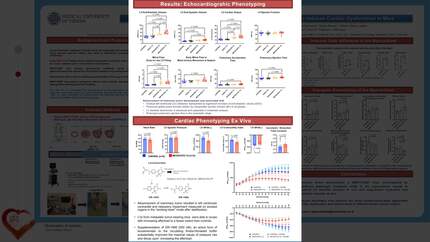
Transgenic mice expressing polyoma middle T-antigen under the direction of mouse mammary tumour virus promoter (MMTV-PyMT) developed orthotopic breast cancer. Their cardiovascular function was analysed at early, advanced, and metastatic phase (MTPh) of tumours, while wild-type littermates served as controls (CTRL). Transthoracic echocardiography was performed at all phases. At MTPh, left ventricular (LV) contractility was evaluated using isolated working heart examinations in the absence or presence of OR1896 (500 nM), an active metabolite of calcium (Ca2+)-sensitizer levosimendan. Metabolic adaptations were evaluated by glucose- and fatty acid-related conversion assays. Histopathology, cardiac proteomic analysis and immunoblotting of Ca2+-homeostasis proteins were performed. Ca2+-transients were analysed in isolated, fluorescently labelled cardiomyocytes. Effects of conditioned media from MET-1 breast cancer cells on H9c2 cardiomyoblasts were evaluated.
Echocardiography showed preserved LV ejection fraction at all phases of tumour and concomitant development of diastolic dysfunction with tumour advancement. Cardiac interstitial fibrosis was not increased in MMTV-PyMT mice. Measurements on isolated working hearts revealed significantly lower maximal rate of pressure development and prolonged isovolumic relaxation time in the LVs of MTPh mice. Following exposure to gradually increased afterload, MTPh tumour-bearing mice exhibited inferior LV contractile reserve compared to CTRLs, which was significantly improved with OR1896. The key cardiac Ca2+-homeostasis regulating proteins, sarcoplasmic reticulum calcium ATPase 2 (SERCA2a), phospholamban, and mitochondrial calcium uniporter were downregulated in the LVs and the amplitude of Ca2+-transients were lower in isolated cardiomyocytes of tumour-bearing mice. Metabolic reprogramming increased the glycolytic and suppressed fatty acid oxidation rate by concomitant depletion of ATP-generating capacity in the myocardium of MTPh mice. Conditioned media from MET-1 cells decreased the survival and ATP-level in H9c2 cells in concentration-dependent manner.
Advanced mammary tumour development triggers a profound metabolic shift in the myocardium, leading to impaired LV diastolic function in vivo and diminished contractile and relaxation capacity ex vivo in a mouse model of breast cancer. Notably, an energy-sparing calcium sensitizer significantly improved LV contractility, highlighting its potential as a novel therapeutic target to mitigate tumour-associated cardiomyopathy.
Contributors


C Dostal
Author
S Nagender Sama
Author
J Reiner
Author
S Hallstrom
Author
N Pilat-Michalek
Author

C Riganti
Author
X Koenig
Author
G Szakacs
Author


You may be interested in