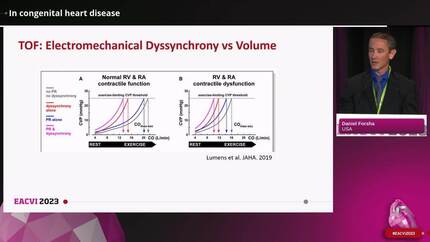
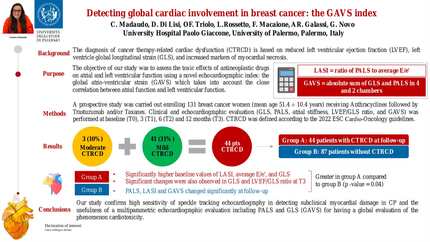
The ability of the conventional echocardiographic parameters to detect early right ventricular impairment during cancer therapy
European Heart Journal Supplements


Abstract
Evidence supports right ventricular (RV) damage as a result of systemic oncologic therapy (OT). The most consistent findings show an early worsening of the RV's deformational echocardiographic (ECHO) parameters, defining the OT-related subclinical RV dysfunction. Oncologic patient surveillance with speckle-tracking echocardiography is limited due to the need for specialised equipment.
The study investigated the changes in RV's functional conventional ECHO parameters induced by systemic OT.
This single-centre study prospectively evaluated 60 adult patients with breast (n = 50) and gastrointestinal (n = 10) cancers by 2D echocardiography at baseline and at the 1st, 3rd, 6th, 9th, 12th, and 18th months after the start of chemotherapy (CT). Patients who had a poor acoustic window, cardiomyopathy, reduced left ventricular (LV) ejection fraction (EF), valvular disorders, heart failure, atrial fibrillation, chronic pulmonary diseases, pulmonary embolism, or attended fewer than three visits were excluded. The observed RV parameters comprised RV fractional area change (RVFAC), tricuspid annular plane systolic excursion (TAPSE), systolic (S') and early diastolic (e') tissue velocities, Tei index (RVMPI), E/A and E/e' ratios. RV dysfunction was defined as a concurrent pathological decline in at least two functional measures: RVFAC ≤ 35% with a relative reduction (Δ) > 20%; Δ RVS' > 15% and RVS' ≤ 9.5 cm/s; Δ TAPSE > 15% and TAPSE ≤ 16 mm; Δ RVMPI-TDI > 15% and RVMPI-TDI > 0.55.
The patient's mean age was 53 years, with 91.7% being female. Thirty patients (50%) underwent anthracycline-based CT with or without trastuzumab; the other half received non-anthracycline CT with or without trastuzumab. The median follow-up time was 381 (IQR 187, 464) days. Generalised estimating equations regression analysis revealed a statistically significant reduction in RVFAC and RVS' beginning as early as the first month, with decreases of 2.3% (95% CI -3.9, -0.75, p = 0.004) and 0.73 cm/s (95% CI -1.3, -0.17, p = 0.01), respectively. Asymptomatic RV dysfunction occurred in 11.7% (n = 7) of the population with a median onset time of 257 (IQR 126, 462) days. None of these seven patients had an LVEF decrease < 50%; however, 6 showed impaired longitudinal LV function based on low LV systolic tissue velocities. No clinical parameter related to the patient's risk factors and the OT predicted the deterioration of the RVFAC, RVS' or RV function (Figure 1). The RVe' was a prognostic factor for the RVS' change (β 0.34, 95% CI 0.1, 0.98, p = 0.005) and for the RV dysfunction (OR 0.47, 95% CI 0.24, 0.92, p = 0.027) (Figure 1). The RVe' drop to 9.8 cm/s predicted RV dysfunction with a specificity of 76% and a sensitivity of 86% (AUC 0.83) (Figure 2).
The early alterations in conventional RV parameters support their routine monitoring during OT. There is a prognostic relationship between diastolic and systolic conventional RV ECHO indicators.
Contributors


You may be interested in