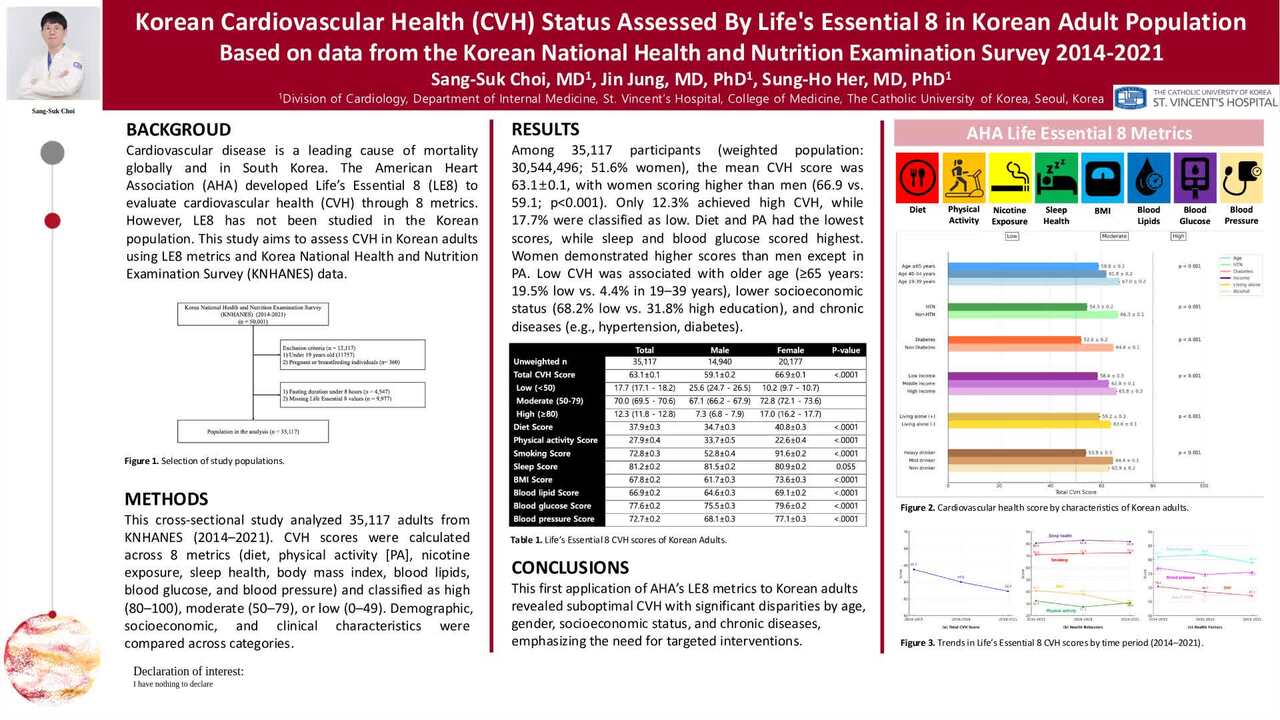
Parental influence on adolescents’ cardiovascular health: insights from household data in the Korea National Health and Nutrition Examination Survey
European Journal of Cardiovascular Nursing


Abstract
This study aimed to develop and validate a hypothetical model explaining the cardiovascular health of Korean adolescents, focusing on the pathways through which parental cardiovascular health and behaviours influence those of adolescents.
This secondary analysis used data from the Korea National Health and Nutrition Examination Survey household unit (2015–19). Participants were adolescents aged 12–18 years and their parents from two-parent households. Cardiovascular health was calculated by summing five risk factors—body mass index, cholesterol levels, smoking status, blood pressure, and fasting blood sugar—with each item categorized as ‘poor,’ ‘intermediate,’ or ‘ideal’ according to the relevant criteria. To examine pathways influencing adolescent cardiovascular health, 1290 adolescent–mother pairs and 936 adolescent–father pairs were analysed using path analysis in Mplus statistical software, with models constructed for cardiovascular health, physical activity, and dietary habits. The model fit indices were good for both the hypothesized adolescent–mother and adolescent–father pair models. Both path analyses showed that mothers’ cardiovascular health and fathers’ cardiovascular health were significantly associated with adolescent cardiovascular health (
This study confirmed that adolescents’ cardiovascular health, physical activity, and dietary habits are directly influenced by both parents’ cardiovascular health and corresponding health behaviours. In school health, effective intervention strategies for high-risk groups for cardiovascular health should include parental involvement and family-based behavioural modifications.
Contributors

Yeo Jin Lee
Author
You may be interested in