An autopsy case of idiopathic fulminant eosinophilic myocarditis: a case report
European Heart Journal - Case Reports


Abstract
Eosinophilic myocarditis is a rare and fatal form of inflammatory myocardial disease. It is frequently caused by a systemic disorder, which can remain undetected in up to one-third of patients. Eosinophilic myocarditis can have mild to fulminant clinical presentation.
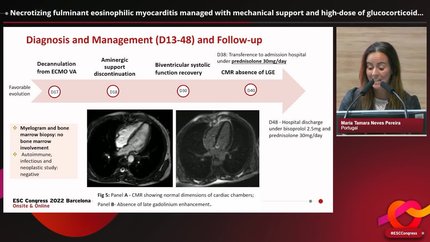
We present a case of fulminant eosinophilic myocarditis in a 68-year-old woman. The patient was admitted for cardiogenic shock with electrocardiographic abnormalities and elevated troponin I levels. After an unremarkable coronary angiography, a myocardial biopsy was performed. Right-heart catheterization revealed low cardiac output and elevated mean pulmonary arterial wedge pressure. A lower pulmonary artery pulsatility index (0.63) indicated right ventricular dysfunction. Despite intensive treatment including dobutamine, the patient suffered a cardiac arrest triggered by sustained ventricular tachycardia. The patient was successfully resuscitated using veno-arterial extracorporeal membrane oxygenation and intra-aortic balloon pumping (IABP). IABP was upgraded to Impella CP at our hospital after the patient could not maintain her blood pressure. A biopsy showed eosinophilic myocarditis, despite a stagnant peripheral blood eosinophil count. Initiating methylprednisolone and immunoglobulin therapies improved left ventricular function. However, right ventricular function did not improve. Despite these treatments, the patient died 31 days after admission. Autopsy revealed minimal infiltration of inflammatory cells, suggesting the effectiveness of this medication. However, extensive necrotic changes were observed in the myocardium.
This case involved fulminant eosinophilic myocarditis with biventricular dysfunction treated with mechanical circulatory support and steroid therapy. Prompt steroid treatment before confirmation of biopsy results may improve the prognosis.
Contributors

Masashi Yamaguchi
Author
Hiroshi Koyama
Author
Shinichi Teshima
Author
Diego Araiza-Garaygordobil
Author
Ciro Santoro
Author
Nicolo Sisti
Author
You may be interested in