The role of epicardial adipose tissue remodelling in heart failure with preserved ejection fraction
Cardiovascular Research


Abstract
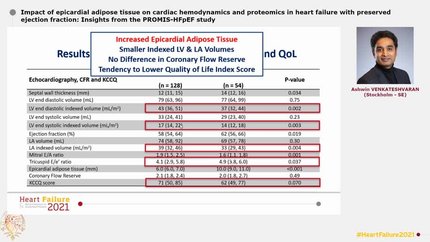
Heart failure with preserved ejection fraction (HFpEF) is a growing global health problem characterized by high morbidity and mortality, with limited effective therapies available. Obesity significantly influences haemodynamic and structural changes in the myocardium and vasculature, primarily through the accumulation and action of visceral adipose tissue. Particularly, epicardial adipose tissue (EAT) contributes to HFpEF through inflammation and lipotoxic infiltration of the myocardium. However, the precise signalling pathways leading to diastolic stiffness in HFpEF require further elucidation. This review explores the dynamic role of EAT in health and disease. Drawing upon insights from studies in other conditions, we discuss potential EAT-mediated inflammatory pathways in HFpEF and how they may contribute to functional and structural myocardial and endothelial derangements, including intramyocardial lipid infiltration, fibrosis, endothelial dysfunction, cardiomyocyte stiffening, and left ventricular hypertrophy. Lastly, we propose potential targets for novel therapeutic avenues.
Contributors

Carolina Janssen-Telders
Author
Amsterdam University Medical Centre (AUMC) Amsterdam , Netherlands (The)

Etto C Eringa
Author

Frances S de Man
Author

You may be interested in