Abstract
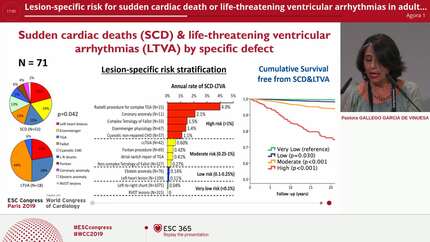
Sudden cardiac death (SCD) accounts for up to 25% of deaths in patients with congenital heart disease (CHD). To date, research has largely been driven by observational studies and real-world experience. Drawbacks include varying definitions, incomplete taxonomy that considers SCD as a unitary diagnosis as opposed to a terminal event with diverse causes, inconsistent outcome ascertainment, and limited data granularity. Notwithstanding these constraints, identified higher-risk substrates include tetralogy of Fallot, transposition of the great arteries, cyanotic heart disease, Ebstein anomaly, and Fontan circulation. Without autopsies, it is often impossible to distinguish SCD from non-cardiac sudden deaths. Asystole and pulseless electrical activity account for a high proportion of SCDs, particularly in patients with heart failure. High-quality cardiopulmonary resuscitation is essential to improve outcomes. Pulmonary hypertension and CHD complexity are associated with lower likelihood of successful resuscitation. Risk stratification for primary prevention implantable cardioverter-defibrillators (ICDs) should consider the probability of SCD due to a shockable rhythm, competing causes of mortality, complications of ICD therapy, and associated costs. Risk scores to better estimate probabilities of SCD and CHD-specific guidelines and consensus-based recommendations have been proposed. The subcutaneous ICD has emerged as an attractive alternative to transvenous systems in those with vascular access limitations, prior device infections, intra-cardiac shunts, or a Fontan circulation. Further improving SCD-related outcomes will require a multidimensional approach to research that addresses disease processes and triggers, taxonomy to better reflect underlying pathophysiology, high-risk features, early warning signs, access to high-quality cardiopulmonary resuscitation and specialized care, and preventive therapies tailored to underlying mechanisms.
Contributors

Michael J Silka
Author

James A DiNardo
Author
Jim T Vehmeijer
Author
Mary N Sheppard
Author
Alexander van de Bruaene
Author
Marie-A Chaix
Author
Margarita Brida
Author
Benjamin M Moore
Author
Maully J Shah
Author
Blandine Mondésert
Author
Seshadri Balaji
Author
Michael A Gatzoulis
Author

You may be interested in