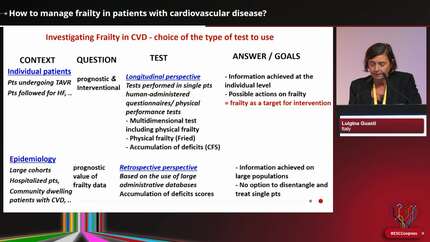
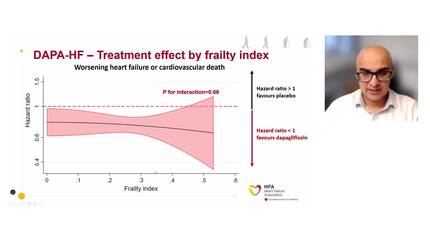
Frailty evaluation a key to tailored cardiovascular rehabilitation in elderly patients
European Journal of Preventive Cardiology


Abstract
Aging most frequently is associated with increasing number of comorbidities and disability leading to frailty, which decreases functional independence. Cardiovascular rehabilitation can be challenging in these situations.
Our aim was to assess frailty syndrome in elderly patients, as part of a comprehensive cardiovascular rehabilitation program and to identify the main components contributing to loss of self –care.
A total number of 92 patients (53,3% female) , aged 60 years or older (mean age 72,4 ±7,44 ) admitted to a cardiovascular rehabilitation clinic were included in a cross- sectional study. History, physical examination and guideline recommended investigations were performed. 2 different instruments were used to evaluate frailty: Clinical Frailty Scale (CFS) and Frail Scale (FS). Based on the obtained points, patients with a mean CFS score of 5 or higher or a mean FS score 3 or higher were classified into the frail group. We compared the clinical and laboratory parameters of the frail patients with data of the non-frail group. In addition we looked for occurence of frailty in individuals below 70 years compared to those above 70 years. Data were processed using Microsoft Excel 2019 , t- test and chi-square test, p<0.05 was considered statistically significant.
30 patients (32,6%) were identified with frailty according to CFS and also based on FS. Mean age of frailty patients was higher (76,89 ±6,7 years vs. 70,37 ±6,7 years , p < 0,001). Prevalence was significantly higher in subjects older than 70 years (28% vs 11%, p<0,001) according to CFS, but not to FS. In the frailty group the following parameters were significantly lower : serum albumin (3.92 g/dl vs. 4.15 g/dl, p=0.02), hemoglobin (12.01 g/dl vs. 13.13 g/dl; p =0.01) and eGFR (66.65 ml/min/1.73 m2 vs. 82.86 ml/min/1.73 m2, p=0.02). Based on CFS the following comorbidities were more prevalent in the affected group: atrial fibrillation (57,1% vs 30,6%, p=0,01), chronic kidney disease (42,85% vs 18%, p < 0,001) and osteoarticular diseases (39% vs 19%, p=0,04). FS score based evaluation showed that previous stroke (26% vs 8%, p=0,01) , CKD (50%vs 15%, p=0,01) and osteoarticular diseases (39% vs 19%, p=0,04) were more frequent in frail patients.
Assessment of frailty can be integrated in older cardiovascular patient's evaluation. Revealing and addressing specific frailty related aspects could overcome the barrier to restoration of their functional independence.
Contributors

You may be interested in