Real-world clinical outcome related to veno-arterial extracorporeal membranous oxygenator: a single-center experience
European Heart Journal - Acute CardioVascular Care


Abstract
None.
Veno-arterial extracorporeal membranous oxygenator (VA-ECMO) is one of the most powerful devices that rapidly restore sufficient organ perfusion in patients with cardiogenic shock. Despite abundant experiences of successful resuscitation with VA-ECMO, evidences for clinical benefit of VA-ECMO are still lacking.
We summarised clinical outcomes related to VA-ECMO and investigated predictors regarding survival at discharge.
Patients who treated with peripheral VA-ECMO between 2006 and 2022 were included from a Hospital in South Korea. Eligible patients were analysed in stratification with ECMO initiation year (year 2006–2010, year 2011–2016, and year 2017–2022). Survival status at discharge were investigated.
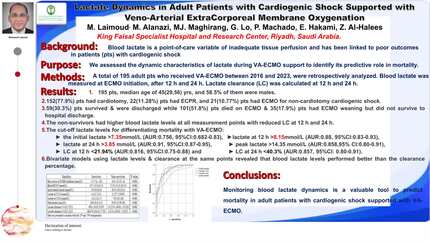
Among total of 693 patients included, 223 (32.2%) were survived at discharge. Survivors had stayed in hospital for median 28 (19–52) days. The overall volume of ECMO initiation (86 runs vs. 250 runs vs. 357 runs) and the rate of extracorporeal CPR (3.5% vs. 18.4% vs. 38.1%) have increased over time. The median duration of VA-ECMO treatment has increased over time (52.6 hours vs. 63.6 hours vs. 85.8 hours). The serum lactate test has been performed more frequently over time (15.1% vs. 79.6% vs. 99.2%). Among 470 patients who died in the index hospitalization, 154 (32.8%) patients died in the first 24 hours after initiation of VA-ECMO. In a multivariate regression model, age over 70 (OR, 0.54; 95% CI, 0.32–0.89), extracorporeal CPR (OR, 0.42; 95% CI, 0.24–0.71), and lactate level ≥8.0 mmol/L (OR, 0.24; 95% CI, 0.15–0.37) were associated with unfavorable outcome while hemoglobin was a predictor of favorable clinical outcome (OR, 1.16; 95% CI, 1.07–1.25).
The volume of VA-ECMO has increased and clinical severity has also become higher than before. The rate of survival at discharge after VA-ECMO treatment remains stable; however, the rate of patients who died in the first 24 hours is still high. Age, extracorporeal CPR, hemoglobin and lactate levels were predictors of clinical outcome after VA-ECMO treatment.


You may be interested in