Case report on heart transplantation in endomyocardial fibrosis: ‘do not let your guard down’—suspicion of disease recurrence after heart transplantation
European Heart Journal - Case Reports


Abstract
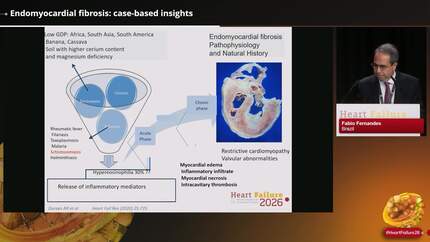
Endomyocardial fibrosis (EMF) is a challenging disease that leads to severe heart failure (HF) due to progressive fibrosis. Diet, parasitic infections, autoimmune disorders, and genetic predisposition have been advocated in EMF pathogenesis, and treatment options for EMF are limited with scarce evidence supporting heart transplantation (HTx).
A 38-year-old man was diagnosed with EMF with biventricular involvement. The diagnostic work-up ruled out eosinophilia, infections, and autoimmune conditions. The patient rapidly deteriorated, leading to cardiogenic shock with multiorgan failure, and an emergency HTx was performed. Three months later, the graft developed biventricular hypertrophy with atrial fibrosis and the endomyocardial biopsy (EMB) showed extensive inflammation and myocardial damage, compatible with Grade 2R (G3a) cellular rejection. After steroid pulses, the follow-up EMB reveals subendocardial fibrosis and microcalcifications, suggesting the possibility of an EMF recurrence. Nevertheless, the patient had a good clinical outcome, remaining asymptomatic with good graft function 2 years after the transplant.
This is the first reported case of suspected EMF recurrence following HTx. Given the unknown pathogenesis of EMF, close monitoring is crucial, though HTx appears to be a viable and successful treatment option for these patients.
Contributors

Lorena Herrador
Author
Jara Gayán-Ordás
Author
Roger Llatjós
Author
Eduard Claver-Garrido
Author

Luca Monzo
Author
Debbie Falconer
Author
Henrik Fox
Author
Vincenzo Nuzzi
Author
Eftychia Galiatsou
Author
Elton Luo
Author
You may be interested in