Atrial fibrillation status and associations with adverse clinical outcomes in patients hospitalized with COVID-19: a large unselected statewide population-linkage study
European Heart Journal - Quality of Care and Clinical Outcomes


Abstract
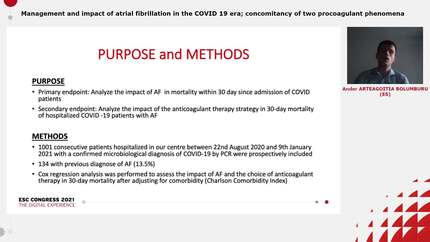
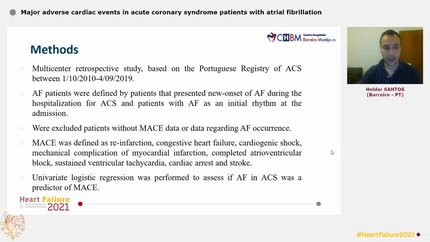
Atrial fibrillation (AF) is common in COVID-19 patients. The impact of AF on major-adverse-cardiovascular-events (MACE is defined as all-cause mortality, myocardial infarction, ischaemic stroke, cardiac failure, or coronary revascularization), recurrent AF admission, and venous thromboembolism in hospitalized COVID-19 patients is unclear.
Patients admitted with COVID-19 (1 January 2020 to 30 September 2021) were identified from the New South Wales Admitted-Patient-Data-Collection database, stratified by AF status (no-AF vs. prior-AF or new-AF during index COVID-19 admission) and followed-up until 31 March 2022. Multivariable Cox regression and competing risk analyses were performed to assess the impact of AF on MACE and non-fatal outcomes respectively. Our cohort comprised 145 293 COVID-19 patients (median age 67.4 years old; 49.7% males): new-AF,
COVID-19 patients with AF are at high risk of adverse clinical outcomes. Such patients may need increased surveillance and consideration for early anticoagulation.
Contributors


Clara K Chow
Author
Vincent Chow
Author
Karice Hyun
Author

David Brieger
Author
Austin Chin Chwan Ng
Author
You may be interested in